The New Architecture of Media Operations: Introducing the Xytech Product Family

The New Architecture of Media Operations: Introducing the Xytech Product Family

The New Architecture of Media Operations: introducing the Xytech Product Family

For over 30 years, Xytech has been at the heart of media operations — the software that broadcasters, media service companies, and content owners rely on to manage the complex work of getting content made, processed, and delivered. That heritage shapes everything we do.

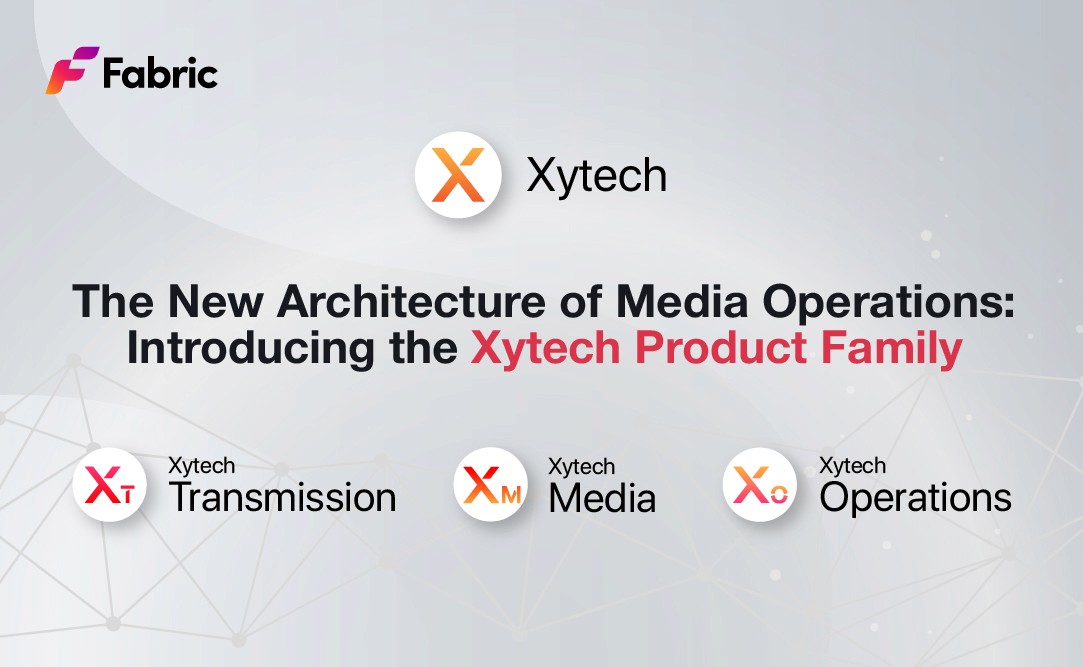
Today, we’re introducing a new structure for the Xytech product family. The capabilities you depend on remain, and our investment in them is deeper than ever. What’s changed is how we present and organise those capabilities — three focused products, each with a clear purpose and a defined set of problems it solves.

Prioritizing Clarity in Our Product Offerings

At Fabric, we've been increasingly willing to make deliberate choices about what belongs in our products and what doesn't. This isn't about reducing capability — it's about sharpening it. The best enterprise software makes a clear promise about the value it delivers and keeps that promise exceptionally well.

The new Xytech structure reflects that thinking. Three offerings, each addressing a distinct part of the media operations landscape.

Xytech Operations

Xytech Operations addresses the service delivery side of the business — managing the continuous flow of orders, jobs, assets, and teams that characterises broadcast and media services environments. It’s built for organisations that need to meet client commitments reliably, at pace, and at scale.

Service order management, workflow automation, and operational visibility come together in a product designed for the demands of a 24/7 media operation. Xytech Operations is where the day-to-day running of a media services business gets done.

Xytech Media

Xytech Media is built for the production and operational teams responsible for managing the content lifecycle — from rights and finance through scheduling, resource planning, and post-production. It provides a single system of record for the work that gets content made: tracking productions, managing costs, coordinating facilities, and aligning the people and resources involved.

For organisations running complex, multi-project production environments, Xytech Media brings structure and visibility to work that would otherwise be managed across disconnected systems.

Xytech Transmission

Transmission and playout management is a specialist discipline — technically exacting, operationally time-critical, with little tolerance for error. Xytech Transmission is purpose-built for this domain, providing the tools that transmission teams need to manage on-air delivery with confidence.

By treating transmission as a dedicated product rather than a feature set within a broader platform, we’re able to go deeper on the specific workflows and integrations that matter most to the teams doing this work.

And Introducing Xytech X2: A New User Experience

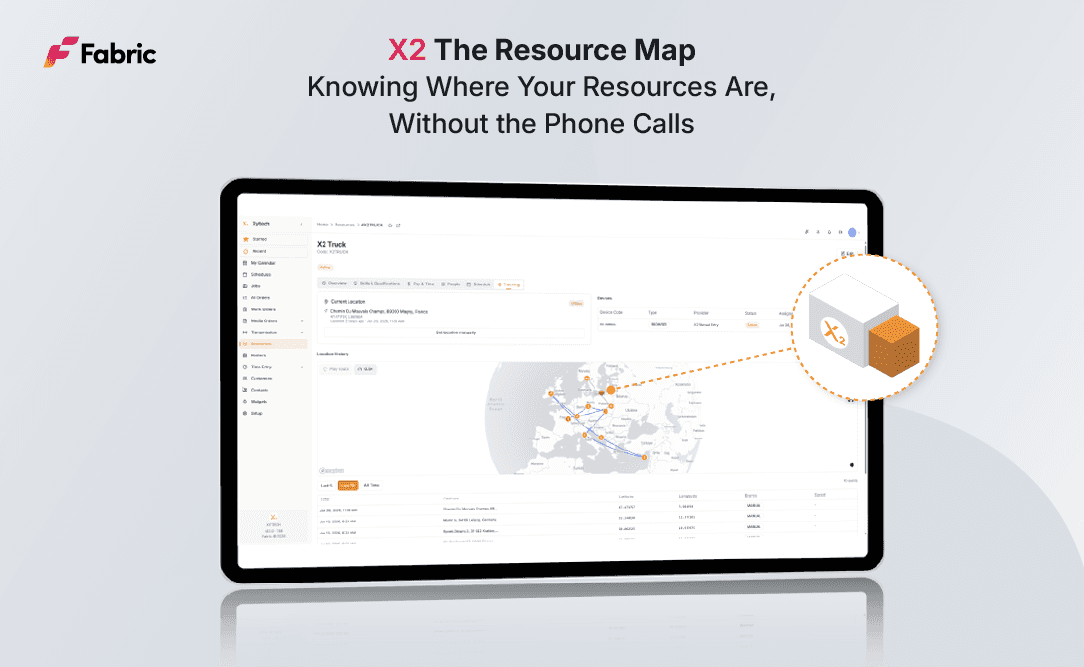
Alongside the new product structure, we’re introducing X2 — the next generation of the Xytech user interface. Xytech has always had a significant depth of capability and X2 is designed to make that depth more accessible.

A cleaner visual design, simplified navigation, and more intuitive user journeys mean that users can move through Xytech’s capabilities with less friction. For experienced users, it reduces the overhead of day-to-day tasks. For new users, it accelerates the path to productivity.

Built on 30 Years. Invested in What’s Next.

The new Xytech product family sits alongside Origin — Fabric’s data and metadata platform — as part of a broader vision for what modern media technology should look like. Together, they address the operational and data layers of the media business in a way that’s coherent, integrated, and built for how the industry is evolving.

For existing Xytech customers, this represents a significant ongoing investment in the products you rely on — in cloud infrastructure, in user experience, and in the depth of capability each product delivers. For organisations evaluating media operations software, it’s a clearer picture of what Xytech is and what it’s for.

We’ll be sharing more on each product in the coming weeks!


Read More Articles

We're constantly pushing the boundaries of what's possible and seeking new ways to improve our services.

Origin Nexus Entertainment Search API with StartDateStart and StartDateEnd date range filters applied, returning a list of movies and TV titles with upcoming streaming availability dates across major U.S. platforms.

May 11, 2026

Filter Content by Streaming Availability Dates with the Origin Nexus API

Developers can now filter movies and TV titles by the date they become available on streaming platforms, using two new Origin Nexus API parameters. Here is what you can build with them and why availability-date filtering changes how audiences discover content before it starts trending.

Illustration showing three separate department systems, distribution, marketing, and rights management, each holding a different version of the same content record, contrasted with a single unified metadata platform feeding all downstream systems from one authoritative source.

May 7, 2026

Your Metadata Has More Than One Version of the Truth. That's the Problem.

When three departments each maintain their own record for the same title, none of them wrong but none of them the same, the real cost isn't the occasional incident. It's the permanent overhead of a metadata environment nobody fully trusts. Here's what a genuine source of truth looks like and what it takes to build one.

Illustration showing a media operations workflow moving from fragmented manual coordination across email, spreadsheets, and verbal handoffs to a structured, automated system with centralized job tracking and task progression.

May 6, 2026

Media Workflow Automation: How Modern Facilities Are Eliminating Manual Handoffs

Manual handoffs are not just an inconvenience in media operations — they are a structural cost that scales with every job, every team member, and every new client. Here's how modern facilities are replacing coordination overhead with automated workflows, and what that shift looks like in practice.

World map highlighting global streaming platform developments for April 2026, including new launches in Argentina, Brazil, Germany, India, and the United States, HBO Max's European and Indian expansion, AVOD updates across North America, and sports rights shifts in Central America and Europe.

May 5, 2026

The Streaming Moves That Mattered in April 2026

April 2026 reshaped the global streaming map in ways that matter beyond the headlines. HBO Max completed its European rollout, AVOD platforms consolidated around clear winners, sports rights redrew regional competition in Central America and Europe, and niche platforms continued carving out specific audiences. Here's what the month's moves mean for content strategy and distribution planning.

Xytech X2 benefits

May 4, 2026

What ScheduALL Got Right About Transmission — and Where Xytech’s X2 Goes Further

ScheduALL built its reputation in broadcast by solving a genuinely hard problem: transmission scheduling that understands how resources relate, not just whether they are individually available. Xytech's X2 Transmission replicates that relational foundation and goes further, adding a cloud-native architecture, a Network Visualizer, and an AI scheduling layer that changes what experienced transmission teams can accomplish in a day.

A layered pyramid or stacked diagram showing the five metadata types from bottom to top

Apr 30, 2026

Metadata: The Hidden Engine Behind Every Streaming Recommendation

Metadata is the hidden engine behind every streaming recommendation. For platforms competing on content discovery, the quality, depth, and normalization of movie and TV metadata — from genre tags and contributor records to thematic enrichment and availability windows — determines whether recommendation engines surface the right title or settle for a generic list. This post breaks down the layers of entertainment metadata that matter most, why sparse or inconsistent data produces shallow discovery experiences, and how continuous enrichment pipelines are the only scalable answer to keeping a catalog current. If your platform's engagement metrics aren't where they should be, your metadata infrastructure is worth examining.

Ready to take your data to the next level?

Copyright © 2026 Fabric. All Rights Reserved

Powered by AWS

Ready to take your data to the next level?

Copyright © 2026 Fabric. All Rights Reserved

Powered by AWS

Ready to take your data to the next level?

Copyright © 2025 Fabric. All Rights Reserved

Powered by AWS

Ready to take your data to the next level?

Copyright © 2025 Fabric. All Rights Reserved

Powered by AWS