Learn More

Xytech is machine-operable end to end. The X2 MCP server exposes Xytech's operational surface — orders, media workflows, resource scheduling, transmission — to autonomous agents through OAuth access scoped to the individual tool level. Enterprises delegate exactly the operational authority they choose; agents execute within it, fully audited.
MCP server
Create orders, update media orders, schedule and check resource availability, manage jobs, timecards, and transmission workflows through structured agent tools.
REST API v3
Standards-aligned, with machine-readable schemas, clear errors, and a documented v2 to v3 migration path.
Webhooks
Real-time change events instead of polling.
Agent-readable docs
The full Xytech knowledgebase ships llms.txt and markdown renderings of every page, built for agent consumption.
Governance
OAuth tool-level scoping, role-based access, and audit trails let operations teams grant agents narrow, revocable authority.
Introducing Xytech Transmission
Why Choose Xytech Transmission?


Improved coordination of contribution resources
Greater visibility into delivery readiness
Fewer last-minute conflicts and disruptions
Core Offerings
Transmission
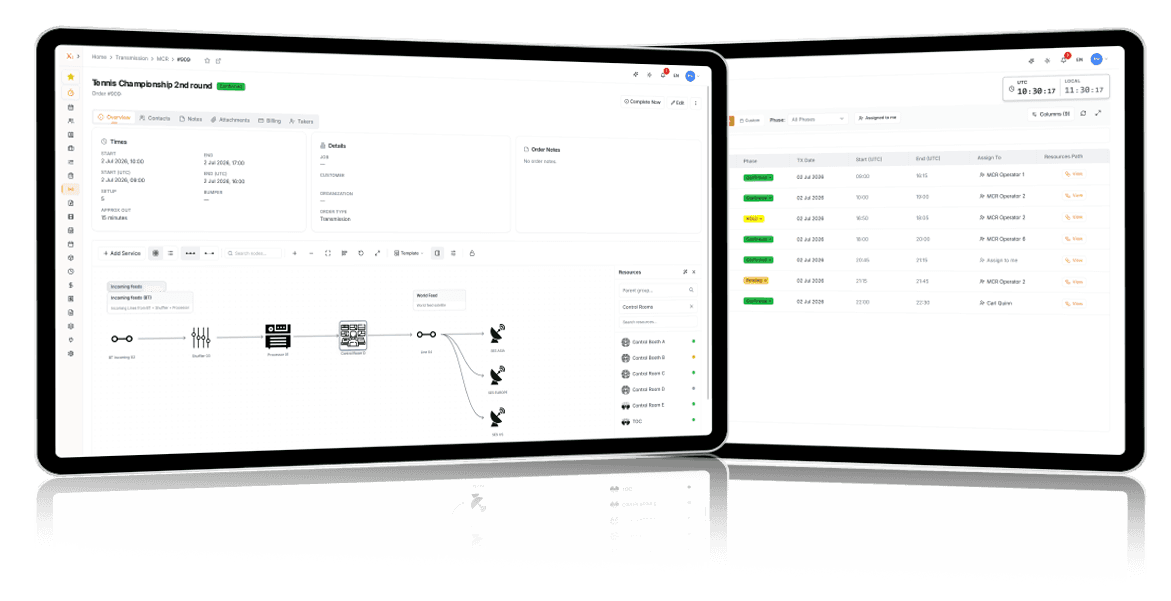
Schedule and coordinate transmission-related resources and activities to ensure reliable delivery across channels and platforms.
Network Visualizer
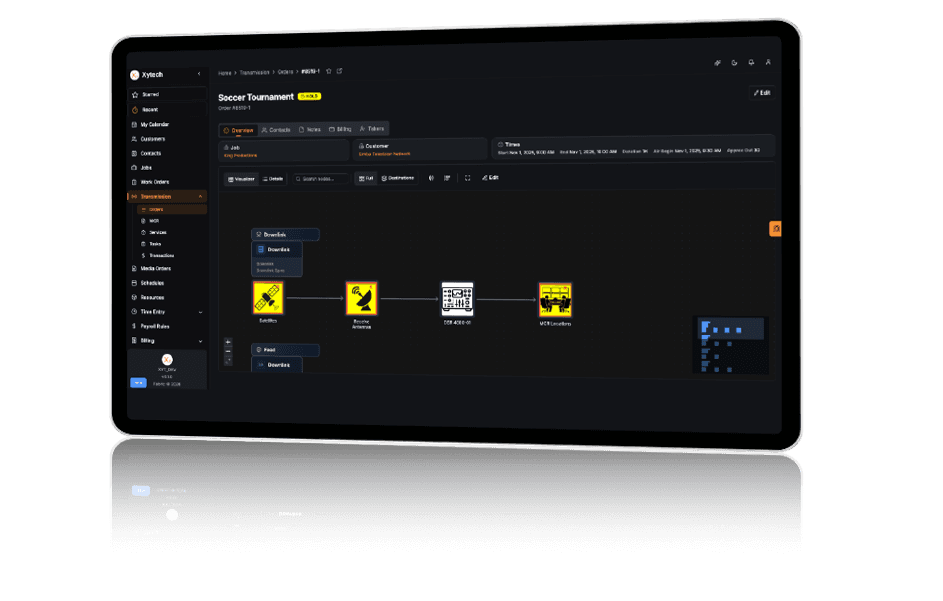
Visualize transmission paths, resource utilization, and dependencies to identify risks and optimize delivery planning.
Transmission Workflows Built for Broadcast, Sports, and Live Production
Contribution Resource Scheduling and Delivery Planning
Conflict detection at planning stage
Overlapping feed bookings and unavailable network paths are surfaced before transmission begins — not discovered during execution when options are limited.
Full resource mapping
Satellite uplinks, fiber paths, signal routing equipment, and technical personnel are all mapped against the production schedule in a single view.
Multi-event coordination
Organizations managing multiple simultaneous live events or broadcast windows get the planning precision required to consistently hit air on time.
Network Visualization and Resource Utilization Visibility
Real-time transmission monitoring
Catch potential failures — an overloaded path, a conflicting resource booking, a signal not arriving as scheduled — before they become delivery incidents. Active transmissions are visible as they happen.
Utilization intelligence for future planning
See utilization patterns across the schedule and adjust proactively — redistributing load, identifying underused capacity, and building more accurate resource models for future planning cycles.
Delivery Coordination and Operational Intelligence Across Teams
Live schedule propagation
When a transmission schedule is updated, the change is reflected immediately across all connected workflows in Xytech Operations and Xytech Media — no manual communication or reconciliation required.
Aggregate delivery intelligence
Patterns in delivery performance — which transmission types encounter conflicts most frequently, which delivery windows carry the most risk, which network paths are most reliably available — become visible over time, enabling strategy optimization based on how infrastructure actually performs.
AI-Enhanced Transmission Operations: Xytech AI and the MCP Server
Xytech AI
Conversational scheduling access
Access transmission data, check resource availability, and interact with operational workflows using natural language — without navigating through menus or running manual queries.
Xytech MCP Server
Structured API layer for agentic AI
Exposes scheduling and resource data through a structured API layer, powering Xytech AI directly and enabling organizations to integrate Xytech Transmission into their broader enterprise agentic AI infrastructure.
Connected Across the Xytech Platform and Enterprise Systems
Xytech Operations
Connects upstream resource planning so that crews, equipment, and facilities scheduled for a production are aligned with the transmission resources required to get content to air.
Xytech Media
Connects downstream lifecycle orchestration so that asset readiness, work order completion, and delivery execution are visible within the same operational framework.
Enterprise systems
API-first architecture supports integration with signal management, rights distribution, and enterprise systems broadcast organizations already depend on — no existing infrastructure needs to be replaced.