Learn More
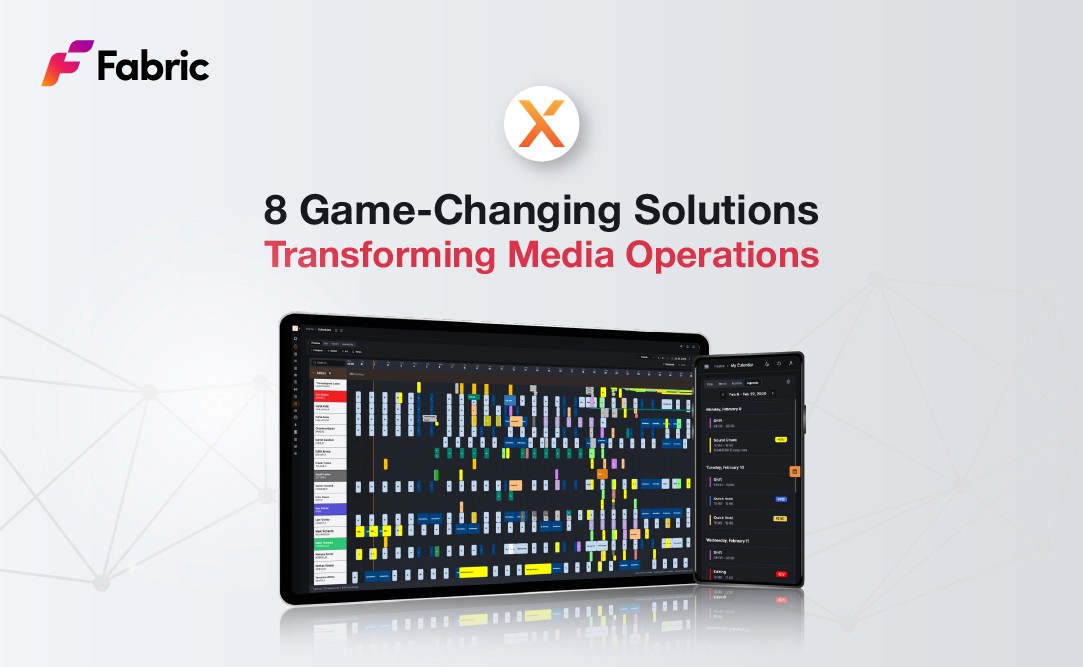
With the launch of the Xytech Product Family, Fabric Data strengthens its commitment to operational clarity across the media ecosystem. Where Origin structures studio data intelligence, Xytech drives execution—powering media services, facility management, and transmission precision.
What Is the Xytech Product Family?
The Xytech Product Family delivers advanced operational solutions for media enterprises.
It includes:
Each component targets a critical operational layer.
Xytech Media: Managing the Full Media Lifecycle
Xytech Media centralizes asset tracking, job management, and workflow visibility. It drives and tracks your media assets as they flow through your media supply chain
Capabilities include:
Project lifecycle tracking
Automated scheduling
Resource allocation transparency
Real-time operational dashboards
Teams move from reactive troubleshooting to predictive management.
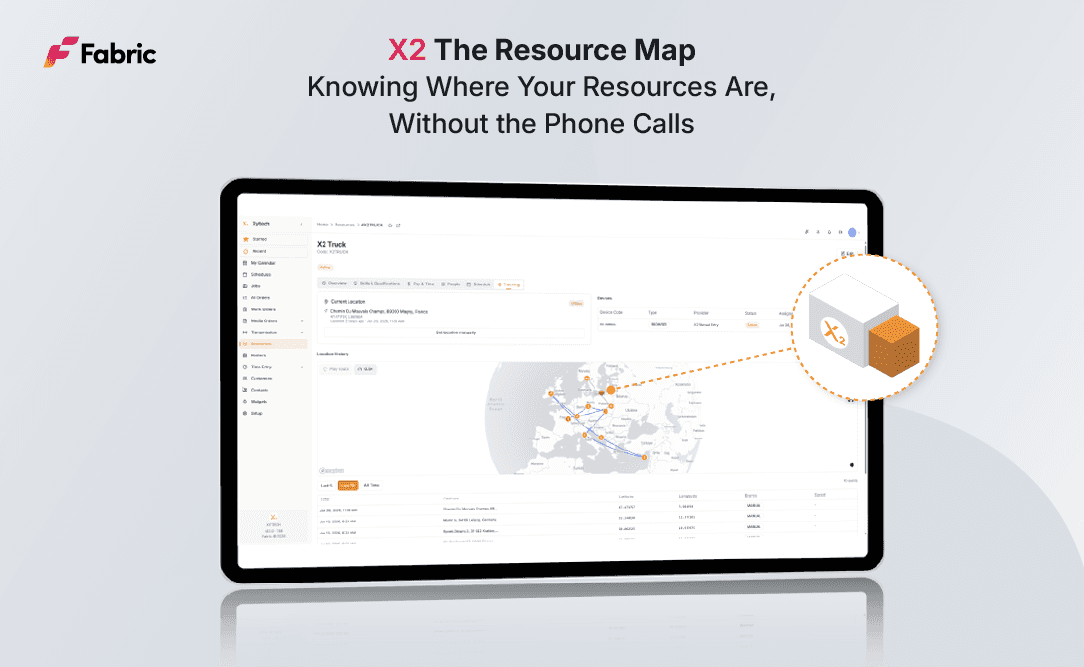
Xytech Operations: Facility and Resource Optimization
Media facilities are high-cost environments. Efficiency directly impacts profitability.
Xytech Operations enables:
Studio and equipment scheduling
Workforce management
Capacity planning
Operational intelligence transforms facilities into data-driven environments.
Xytech Transmission: Precision in Broadcast Contribution and Delivery
Transmission workflows demand accuracy.
Xytech Transmission provides:
Delivery verification
Compliance tracking
Incident management workflows
Real time signal path provisioning
Reliability becomes measurable.
Xytech’s Operational Breakthroughs
The Xytech Product Family is not simply an operational toolkit. It represents eight structural breakthroughs that modernize how media enterprises manage facilities, resources, transmission, and service workflows at scale.
End-to-end operational visibility eliminates blind spots across projects, resources, and delivery timelines. Instead of relying on disconnected scheduling tools or manual coordination, teams gain real-time transparency across the entire operational chain.
Centralized resource orchestration brings people, studios, equipment, and services into one intelligent scheduling framework. This reduces bottlenecks and increases utilization without increasing overhead.
Real-time workflow intelligence transforms operational data into actionable insight. Leaders no longer operate reactively; they anticipate constraints, adjust capacity, and optimize output before inefficiencies escalate.
Integrated financial tracking aligns operational activity with revenue performance. By connecting bookings, costs, and project workflows, Xytech ensures operational decisions directly support profitability objectives.
Transmission precision management reinforces delivery accuracy through monitoring, verification, and compliance controls. In high-stakes broadcast environments, reliability becomes measurable and auditable.
Scalable multi-site coordination enables global enterprises to centralize oversight while maintaining local flexibility. Distributed facilities operate as a unified ecosystem rather than isolated units.
Automation across scheduling and reporting reduces manual data entry, minimizes human error, and accelerates decision cycles.
API-driven interoperability ensures Xytech integrates seamlessly within broader enterprise technology stacks, protecting existing investments while enabling future expansion.
Operational Intelligence Built Into the Core
Operational complexity in media environments has grown exponentially. Facilities must coordinate creative teams, technical staff, assets, transmission deadlines, and client expectations—often across multiple time zones. Without centralized intelligence, even small inefficiencies compound quickly.
The Xytech Product Family embeds operational intelligence directly into daily workflows. Every booking, transmission event, and resource allocation feeds into a unified data model. That model generates insight, not just reports.
Instead of waiting for monthly summaries, executives gain continuous visibility into utilization rates, scheduling conflicts, and delivery performance. Operational clarity becomes constant rather than episodic. This is where modernization truly begins.
Enterprise-Grade Control Without Operational Friction
Scaling media operations requires control, but not rigidity. Xytech balances governance with agility.
Role-based permissions ensure secure access to sensitive operational data. Audit trails create traceability across scheduling changes and financial adjustments. At the same time, cloud-compatible deployment options provide flexibility for hybrid or fully distributed environments.
The architecture supports expansion without forcing reconfiguration. As organizations grow—whether through new facilities, service offerings, or geographic expansion—Xytech scales alongside them.
Governance, in this context, is not restrictive. It establishes operational trust. When teams rely on accurate scheduling, verified transmission data, and synchronized reporting, execution becomes faster and more confident.
Implementation Designed for Continuity
Operational systems cannot afford downtime. That reality shapes how Xytech is deployed.
Adoption occurs through structured transition strategies that respect ongoing production cycles. Integration frameworks map existing workflows and align them with the Xytech architecture. Change enablement ensures teams understand not only how to use the system, but how it improves their daily work.
Rather than forcing disruptive overhauls, modernization unfolds progressively. Facilities continue operating while intelligence layers strengthen around them. This measured approach ensures transformation is sustainable and embraced internally.
Real-World Impact Across the Media Ecosystem
The Xytech Product Family supports broadcast networks, post-production facilities, media service providers, and transmission environments operating under constant pressure.
Across these organizations, measurable operational patterns emerge. Scheduling conflicts decrease because resource visibility improves. Downtime is reduced through proactive coordination. Financial transparency strengthens because project tracking aligns directly with billing workflows. Cross-department communication improves as everyone works from the same operational framework.
In short, Xytech converts complexity into coordination.
From Execution to Strategy
What distinguishes the Xytech Product Family is its ability to elevate operations from tactical management to strategic advantage.
Operational data has traditionally remained trapped within facilities teams. With Xytech, that data becomes executive intelligence. Leaders gain insight into capacity planning, service performance, and profitability trends. Operational decisions align more directly with growth strategies.
Execution and strategy no longer operate in parallel—they operate in sync.
Origin and Xytech: Two Families, One Unified Architecture
While the Origin Product Family establishes the metadata intelligence layer for studios, the Xytech Product Family powers operational execution across facilities and transmission ecosystems.
Origin structures and governs data at the content level.
Xytech orchestrates the physical and technical execution of that content.
Together, they create a cohesive architecture spanning the entire media supply chain—from metadata creation and enrichment to scheduling, resource allocation, and final delivery.
FAQ
Similar Articles
We're constantly pushing the boundaries of what's possible and seeking new ways to improve our services. Search your topic of interest.