Learn More
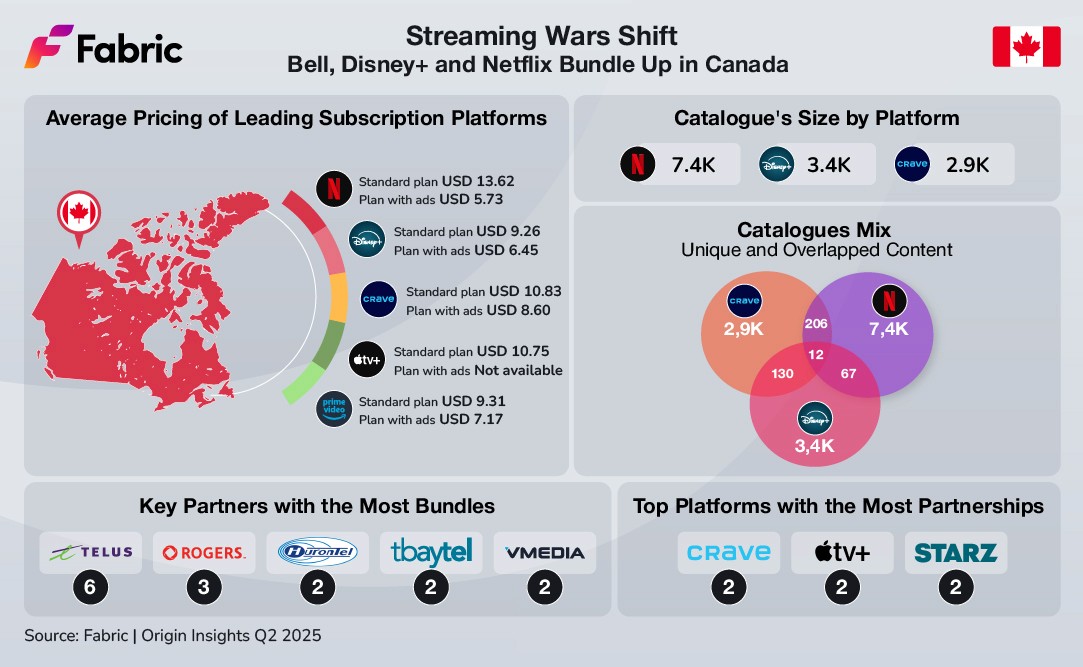
The streaming landscape in Canada is shifting, and Bell Canada—the country’s largest telecommunications company and the parent of Crave—is at the center of this transformation. Rather than competing head-to-head, Bell has embraced strategic partnerships with global players such as Disney+ and Netflix to expand its market reach and strengthen customer loyalty.
Bell Canada Strengthens Its Streaming Portfolio
Bell’s strategy goes beyond offering Crave as a standalone platform. In early 2024, the company signed a major deal with Netflix, followed shortly by an alliance with Disney+. These agreements allow Bell to deliver bundled plans that combine Crave, Netflix, and Disney+ for USD 15,76 per month (CAD 49). If subscribed to separately, the total would reach USD 36 — representing a 56% savings. Additionally, Bell maintains an active partnership with Starz, which further enriches its entertainment library.
With these collaborations, Bell has positioned itself as a leading player and super-aggregator in the Canadian streaming ecosystem, delivering some of the most comprehensive content bundles in the market.
A Shift from Competition to Collaboration in Streaming
The so-called "streaming wars" are no longer solely about fighting for subscribers. Instead, companies are increasingly joining forces to create attractive packages that deliver greater value at a lower price point.
The Disney+ and Bell Media deal is a perfect example. Rather than fragmenting the market, this partnership builds a unified offering that appeals to diverse audiences, from movie lovers to sports fans through TSN.
For Disney+, this move means reaching new users by leveraging Bell’s customer base and tapping into niche segments such as sports enthusiasts. This strategy mirrors Disney's global push to incorporate major sporting events into its streaming platforms, evident in the large content offering in the US, Latin America and Oceania. In the Canadian market, sports appeal is particularly strong: 24% percent of Canadian households show a clear preference for live sports, making it a key driver of engagement. Ice hockey stands out as the most popular sport, with 59% of households ranking it as their favorite, followed by NFL football (39%) and soccer (35%). This aligns seamlessly with the role of local partner TSN (The Sports Network), which holds exclusive rights to major North American leagues such as the NHL (ice hockey), NBA, CFL (Canadian Football League), NFL, and MLB.
Importantly, Disney+ in Canada only signs alliances with telecom providers—Bell, Rogers, and Telus—integrating streaming into internet and TV services.
Disney+, Crave and TSN Bundle Prices in Canada
Bell’s new bundles make premium streaming more affordable, with discounts of up to 38% compared to subscribing to each service individually. Here’s the breakdown:
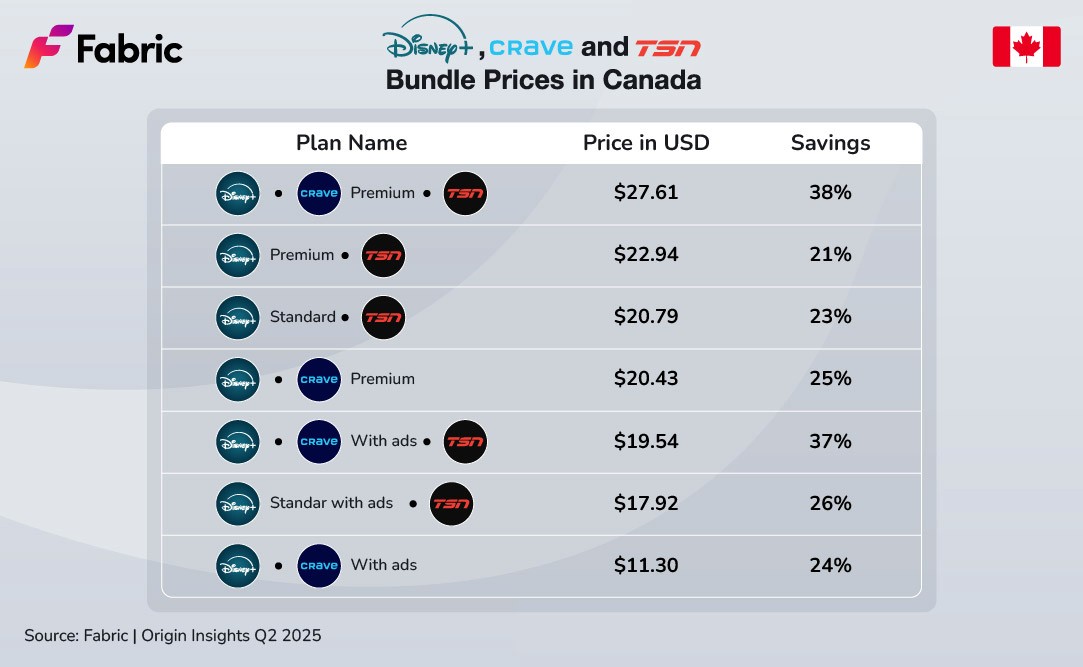
Ad-supported versions of Disney+ and Crave may include promotional content from their own programming. TSN, meanwhile, always includes advertising.
This pricing strategy is particularly relevant in the Canadian market, where 64% of households prefer paying a lower subscription fee that includes ads rather than spending more for an ad-free experience. By emphasizing bundles with ad-supported tiers, Bell effectively aligns its offer with the viewing and spending preferences of most Canadian households.
How Do Subscribers Access the Content?
Even though the bundles are unified under Bell Media, users must still download each streaming app—Disney+, Crave, and TSN—separately. Once subscribed to a bundle, customers log in with a central Bell Media account, streamlining account management and payments.
Why Telecom Companies Are Betting on Bundles
These partnerships present a major opportunity for telecom providers to reduce customer churn. Disney+, for example, maintains a churn rate of just 4%, one of the lowest in the industry. Bundled deals make it harder for subscribers to cancel because of the added value, discounts, and convenience.
If a customer cancels, they not only lose the package price advantage but also face the hassle of managing multiple subscriptions individually. This creates a strong retention mechanism, boosting loyalty and increasing lifetime customer value for companies like Bell.
Beyond Canada: The Rise of Global Streaming Bundles
The trend of bundling isn’t unique to Canada. In the United States, alliances between global and local platforms have already reshaped the industry. Since 2024, Disney+ and Hulu have partnered with HBO Max to offer a joint plan:
With ads: USD 16.99/month
Ad-free: USD 29.99/month
Through this bundle, USA subscribers gain access to a vast library of more than 19K unique titles — Disney+ (11K+), Hulu (8K+), and HBO Max (4K+).
This model shows that cooperation—rather than aggressive competition—may be the future of streaming worldwide.
Bell’s alliance with Disney+ (and its ongoing deal with Netflix) signals a new phase in the streaming market where partnerships define competitiveness. By offering bundled streaming packages that combine affordability, convenience, and variety, Bell is not just keeping up with industry trends—it’s setting the standard for streaming innovation in Canada.
FAQ
Similar Articles
We're constantly pushing the boundaries of what's possible and seeking new ways to improve our services. Search your topic of interest.