
Learn More
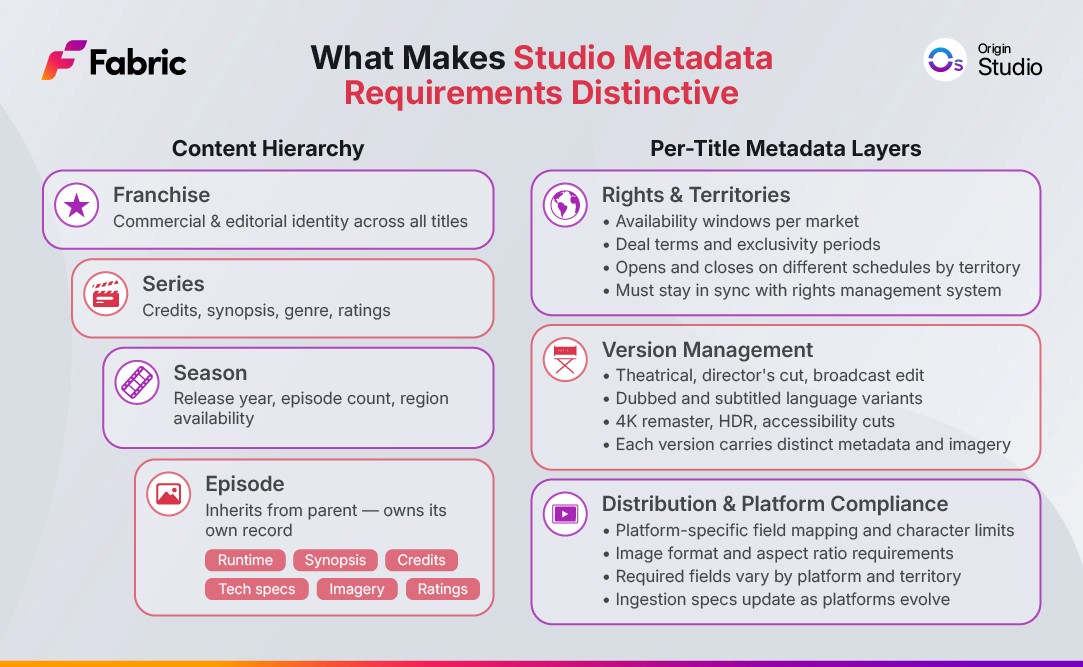
Most metadata problems look like data quality problems. Records are incomplete, inconsistent, or out of date. The instinct is to fix the data. But in a large proportion of cases, the data quality problem is actually an architecture problem. The records are imperfect not because no one cares about accuracy but because the way metadata flows between systems creates inconsistency faster than any editorial team can resolve it.
The organizations that have genuinely solved metadata at scale share one architectural property: they built on an API-first foundation. Not as a technical aspiration, but as an operational principle. The canonical record lives in one place, and every system that needs metadata gets it from there, on demand, in the format it requires, without manual export and re-entry at each integration point.
This sounds obvious when stated directly. It is surprisingly uncommon in practice.
What API-first actually means in a metadata context
API-first metadata management means that the platform is designed from the ground up to expose its records via structured APIs, and that downstream systems are built to consume those APIs rather than to maintain their own independent copies of the data.
The practical consequence is significant. When a record is updated in the canonical system, every downstream consumer receives the updated data automatically. A synopsis change, a cast addition, a rights window update, a new territory availability: each of these propagates to the CMS, the scheduling system, the partner portal, the distribution pipeline, without a coordinator manually exporting the change and re-entering it elsewhere.
This is distinct from a system that has an API as a feature. Many legacy metadata management platforms technically expose APIs, but they were designed for bulk data export rather than for real-time consumption by multiple downstream systems simultaneously. The distinction matters at scale. A system designed for bulk export requires downstream systems to pull data on a schedule and reconcile differences. A system designed for real-time API consumption means downstream systems are always working with current data.
The compounding cost of non-API-first architecture
In organizations that have not built on an API-first foundation, the metadata integration challenge compounds with every new platform or partner added to the distribution footprint.
Each new integration requires a bespoke mapping: how does the local data model translate to the partner's required format? How frequently is the sync run? Who owns the process when the sync fails? These questions are answered once per integration, but the answers create ongoing operational dependencies that accumulate over time.
A catalog distributed across ten platforms has ten integration maintenance burdens. When the data model changes, ten mappings need to be updated. When a new content type is added, ten delivery processes need to accommodate it. When a platform changes its ingestion requirements, the integration with that platform needs to be rebuilt.
Organizations that have been distributing content for decades often carry hundreds of these point-to-point integrations, each maintained separately, each a potential source of inconsistency. The cost is not visible in any single integration. It is visible in the aggregate: in the headcount required to maintain the integration layer, in the error rate on deliveries, in the time required to onboard new distribution partners.
What records management looks like on an API-first platform
On a properly built API-first records management platform, the integration architecture looks fundamentally different. The canonical metadata platform exposes a consistent API layer, and downstream systems integrate once against that layer rather than building bespoke point-to-point connections.
When the data model changes, the change is made in the API layer and all downstream consumers receive it automatically. When a new distribution partner is onboarded, the integration work is primarily on the mapping from the canonical model to the partner's requirements, not on building a new data extraction pipeline from scratch.
The governance layer is equally important. Media records management at scale requires not just an API for delivery but configurable metadata models, role-based access controls, and stage-based approval workflows. The data needs to be accurate and current at the API layer, which means the governance processes that maintain accuracy need to be built into the same system, not bolted on afterward.
This is the connection between API-first architecture and metadata quality. A system that delivers metadata via API to downstream consumers is only as trustworthy as the governance processes that maintain the canonical record. The two are inseparable in a well-designed platform.
How Origin Studio is built for this
Origin Studio is Fabric's records metadata management platform, built API-first and designed for organizations that need metadata to flow reliably to every downstream system without manual intervention.
The platform manages title and episode metadata across movies, series, seasons, and compilations in a hierarchical model aligned with how media workflows actually operate. Records are governed through configurable metadata models, role-based permissions, and stage-based workflows from draft through publication. Every change is tracked and auditable.
The API layer is designed for real-time consumption by multiple downstream systems simultaneously, not for scheduled bulk export. MAMs, CMS platforms, scheduling tools, distribution pipelines, and partner portals all receive metadata from the same authoritative metadata source of truth, in the formats they require, without manual reformatting at each integration point.
The enrichment layer connects directly to Origin Nexus, which means records are continuously enriched with normalized metadata, licensed imagery, contributor data, and streaming availability information without requiring manual data entry at each update cycle. The canonical record stays current because the automated metadata enrichment pipeline keeps it current, not because a team remembers to update it.
For organizations evaluating metadata management platforms, the architecture question is worth asking before the feature comparison. A platform with comprehensive features built on a non-API-first foundation will create the same integration maintenance burden as the legacy system it replaces. The architecture is the decision that compounds, for better or worse, across every integration added afterward.
How Origin Studio addresses studio metadata requirements
Origin Studio is Fabric's studio metadata solution, designed specifically for the hierarchy, governance, and distribution requirements of studios and media organizations managing large content catalogs.
The platform's data model covers movies, series, seasons, episodes, and compilations as distinct record types with explicit relationships between them, aligned with industry standards including EIDR. Configurable metadata models accommodate different content types, rights structures, and distribution requirements without forcing content into generic schemas that do not fit studio workflows. Role-based permissions and stage-based approval workflows ensure that records meet quality standards before they reach published state, with every change tracked and auditable.
Enrichment is integrated at the point of record creation through Origin Nexus, which means records enter the catalog carrying normalized metadata, licensed imagery, contributor data, and availability information from authoritative sources rather than waiting for manual population. The API-first delivery layer means that distribution pipelines, partner portals, MAMs, and CMS platforms all receive metadata from the same authoritative source in real time rather than from periodic exports that may not reflect the current state of the record.
Origin Studio was recognized as a NAB Show 2026 Product of the Year for Media Supply Chain, Automation and Management, reflecting its position as purpose-built infrastructure for the specific governance challenges that studio-scale metadata management presents.
Stay ahead of the curve
We publish regular insights on studio metadata management, catalog governance, and the infrastructure decisions that determine how well media organizations manage and monetize their content. Follow Fabric on LinkedIn for new articles as soon as they drop.
Fabric is a global media data company. The Origin product family, including Origin Nexus, Origin Studio, and Origin Insights, powers metadata enrichment, governance, and market intelligence for entertainment companies worldwide.
FAQ
Similar Articles
We're constantly pushing the boundaries of what's possible and seeking new ways to improve our services. Search your topic of interest.


