Learn More
/
Why Subscriber Retention Matters in LATAM's Streaming Market
Understanding Subscriber Churn in LATAM
Subscribers’ retention remains one of the top challenges for streaming platforms like Prime Video in LATAM. Economic concerns, dissatisfaction, and competition drive users to consider unsubscribing. The first quarter of 2024 showed that 20% of Prime Video’s LATAM users considered canceling their subscriptions.
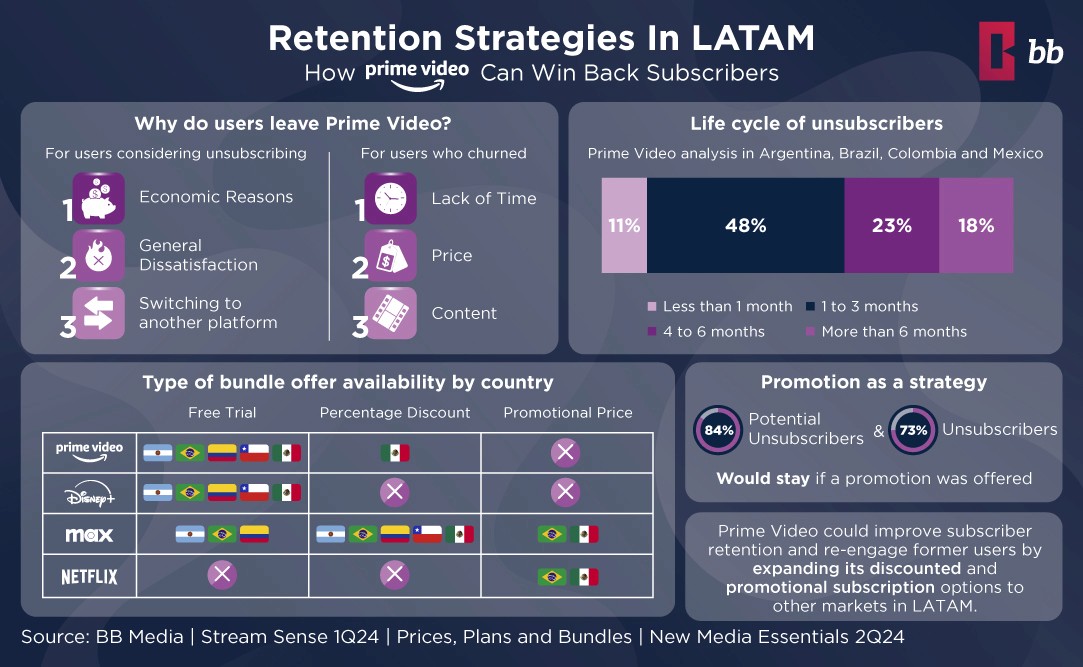
Key factors included economic constraints, which were cited by 38% of users considering cancellation, followed by 17% citing general dissatisfaction and 16% seeking to switch platforms. Content relevance (28%) and pricing (20%) were the primary aspects influencing potential cancellations.
Subscription Durations and Reasons for Cancellation
For those who do follow through with cancellation, subscription durations tended to be short: 48% lasted up to 3 months, and 23% stayed between 4 to 6 months. The leading cancellation reasons included limited time (20%), high costs (19%), and lack of appealing content (14%). For users who found subscription fees unaffordable, 41% mentioned financial constraints, with this percentage rising to 45% in Argentina and Colombia.
Promotions as a Key Retention Tool
Promotions play a crucial role in improving retention. Among potential unsubscribers, 84% said they would stay if offered a discount. For those considering cancellation but presented with a promotion, the discount became the primary reason for staying. In fact, 73% of former subscribers reported they would have stayed had a promotion been available. For those who returned, 43% cited new content and 39% were driven by promotional offers—23% by Prime Video’s own promotions and 16% by third-party discounts.
Current Promotional Strategies and Regional Churn Differences
Prime Video’s current promotional offerings in LATAM include free trials and percentage discounts, though the latter is only available in Mexico. Notably, Mexico boasts the region’s lowest churn rate at 6%, which is 12 percentage points lower than Chile’s 18% rate. This trend suggests that offering discounts, like those in Mexico, significantly aids in retaining users.
Strategic Recommendations for Reducing Churn
To reduce churn and boost retention, Prime Video could benefit from expanding its strategy to not only retain existing subscribers but also re-engage former ones. Here are some key takeaways and recommendations:
Broaden Promotional Offers Across LATAM: Given the positive impact of discounts on subscriber retention in Mexico, Prime Video should consider expanding similar offers across LATAM. This approach could address the high price sensitivity and prevent potential cancellations across the region.
Tailoring Content to Local Preferences: Content dissatisfaction was the reason for 14% of cancellations. Therefore, Prime Video could consider tailoring content based on the local audience’s tastes to drive user engagement. Highlighting popular regional genres and culturally relevant titles can make a difference.
Increasing Awareness of Available Discounts: Many users might not be aware of the available promotions and discounts on Prime Video. Boosting awareness through targeted marketing, especially during high-churn periods, could be a key strategy for retaining existing users and encouraging past subscribers to return.
Enhancing User Retention Through Content Updates: Prime Video can also boost retention by regularly updating content. Adding new series and movies, especially high-demand genres, and informing users of these updates can help maintain interest and engagement.
Check out the Prime Video overview on BB Media’s Streaming Services Directory and get global data for free!
Powered by BB Media, a Fabric Data company
Similar Articles
We're constantly pushing the boundaries of what's possible and seeking new ways to improve our services. Search your topic of interest.