Learn More
/
User Satisfaction, Pricing, and Features
Prime Video continues to solidify its position in the LATAM streaming market, capturing 15% of the total subscription share as of Q2 2024. Second only to Netflix’s 22% market share, Prime Video is a leading choice in the region. But what does the user satisfaction really look like, and what features make it stand out?
Prime Video’s high engagement and daily usage
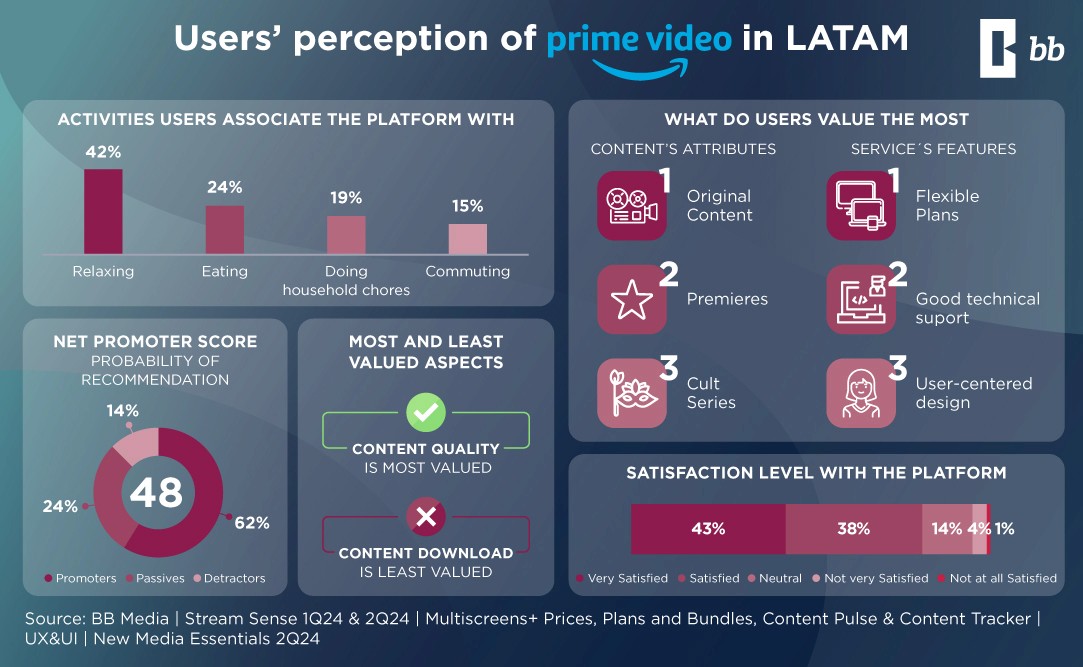
Engagement levels for Prime Video are impressive, with LATAM users frequently choosing the platform in their daily routines. In fact, it is the second most mentioned platform in LATAM users’ “Top of Mind” streaming choices. Approximately 32% of its users watch content daily, while 44% tune in multiple times a week. When asked about their viewing habits, 42% of users associated Prime Video with relaxation, and 24% mentioned watching their favorite shows while dining—a clear indicator of its role in users’ lives.
What LATAM Users Value Most
One of the most valued aspects of Prime Video in LATAM is the quality of its original content. Around 57% of LATAM users praised their original programming, 46% emphasized their enjoyment of new releases, and 18% appreciated its classic and cult series. Currently, the Prime Video library offers 653 original titles, including 132 fresh releases this year, with 88 series and 44 movies. This content variety continues to captivate viewers in the region, enhancing user satisfaction with Prime Video’s unique content offerings.
Prime Video's Flexibility in Plans and Pricing
LATAM users also highlight Prime Video’s plan flexibility as one of its strongest assets. Nearly 47% of users appreciate the variety of plans, a preference that is even more pronounced in Brazil (57%) and Mexico (51%), where additional plan options are available. Beyond flexibility, the platform also stands out for its competitive pricing, offering the most affordable plans among top streaming services such as Netflix, Max, and Disney+. With an average monthly cost of $4.81 USD, Prime Video maintains affordability without compromising on features.
Comparisons with Other Streaming Services
Prime Video goes further than its main competitors by offering unique plan types, including the only transactional plan in the market. With 3 starter plans and an additional 39 customizable options, the platform provides an adaptable experience that appeals to a range of users.
Areas for Improvement
While Prime Video excels in many areas, users have pointed out a few limitations, especially with the content download feature. Currently, content downloads are available on Desktop through the app, which some users find less convenient. Mobile users face additional restrictions: downloads are allowed on only two devices simultaneously, requiring users to delete a title from one device before adding it to another if both slots are already used.
In contrast, Disney+ allows downloads on up to ten devices, while Netflix offers flexible options based on the subscription plan. Improving these restrictions could greatly enhance the user experience and further raise the LATAM user satisfaction.
High Satisfaction in LATAM
Overall, user satisfaction with Prime Video in LATAM remains strong, with 38% of users expressing satisfaction and 43% reporting high satisfaction levels with the platform. However, addressing certain issues—such as download limitations and expanding device availability for downloads—could help further increase retention and attract new users.
By simplifying the downloading experience and extending device limits, Prime Video has the potential to enhance user engagement and lead the market even more robustly in LATAM.
Dive into the Prime Video overview on BB Media’s Streaming Services Directory and get global data for free
Powered by BB Media, a Fabric Data company
Similar Articles
We're constantly pushing the boundaries of what's possible and seeking new ways to improve our services. Search your topic of interest.