Learn More
The ad-supported subscription model has established itself as a stable alternative in the USA streaming market. This analysis focuses on six major platforms– Peacock, Hulu, Disney+, Netflix, HBO Max, and Discovery+–where the trend is most evident. The share of users choosing ad-supported plans has been increasing steadily by 5% per year, rising from 64% to 67% and now reaching nearly 70%.
The demographic that’s most inclined toward this option is users over 55 years old. As a matter of fact, among the users that watch content through a subscription plan, 8 out of 10 in this age group prefer ad-supported plans. They are followed by the 16–24 age group, with 7 out of 10 users favoring ads. Despite users’ growing preferences, platforms remain cautious. Between 2021 and 2025, only 2 out of 109 new streaming launches included ad-supported plans—showing that this model is consolidating mainly among established players rather than newcomers.
Pricing and Balance
Comparing ad-supported and ad-free plans across major USA streaming platforms reveals that pricing strategies are closely tied to user experience and perceived value. Peacock and Discovery+ offer plans at USD 7.99 and USD 5.99 respectively, with relatively low ad exposure (5–7 minutes per hour). This not only allows users to save USD 3– USD 4 per month but also demonstrates a careful balance between cost reduction and minimal disruption - a strategy likely aimed at retaining subscribers who are sensitive to interruptions but still price-conscious.
Hulu and Disney+, by contrast, offer ad-supported plans around USD 9.99 with 6–9 minutes of ads per hour. The higher ad load results in greater monthly savings (USD 6– USD 9), but it risks diminishing satisfaction among audiences who value seamless streaming.
Netflix and HBO Max follow a different approach: they include very few ads (around 3.5–4.5 minutes per hour) but removing them comes at a high cost (an additional USD 10 and USD 8 respectively). This means that paying extra for the ad-free plan isn’t always the most worthwhile choice for users. Their strategy highlights that ads are minimal and non-intrusive, reinforcing their positioning as premium services where advertising is optional rather than central to the experience.
Overall, Peacock and Discovery+ appear to prioritize affordability and value, maintaining a moderate ad load that minimizes disruption. Hulu and Disney+ take a more assertive monetization approach, offering higher savings at the cost of a heavier ad presence. Netflix and HBO Max, meanwhile, seem to position their ad-supported tiers as an entry point into a premium experience—keeping ads minimal but pricing ad-free access significantly higher.
These strategies illustrate that while every platform seeks to optimize revenue, the balance between ad intensity, price, and perceived quality varies. Each service tailors its approach to different audience sensitivities—whether focused on cost savings, viewing comfort, or brand positioning within the competitive streaming landscape.
Advertising Strategies Across Platforms
Ad-supported strategies vary widely, reflecting each platform’s business model and audience focus. Within the same corporate groups, differences are striking. Disney+ and Hulu, for example, present the same titles (10 Things I Hate About You and The Proposal) differently. Disney+ uses fewer, more predictable ad breaks to maintain a family-friendly, premium experience, while Hulu deploys a larger volume of unique ads, prioritizing revenue over uninterrupted viewing. This shows how a single company can simultaneously pursue distinct strategic goals across its services.
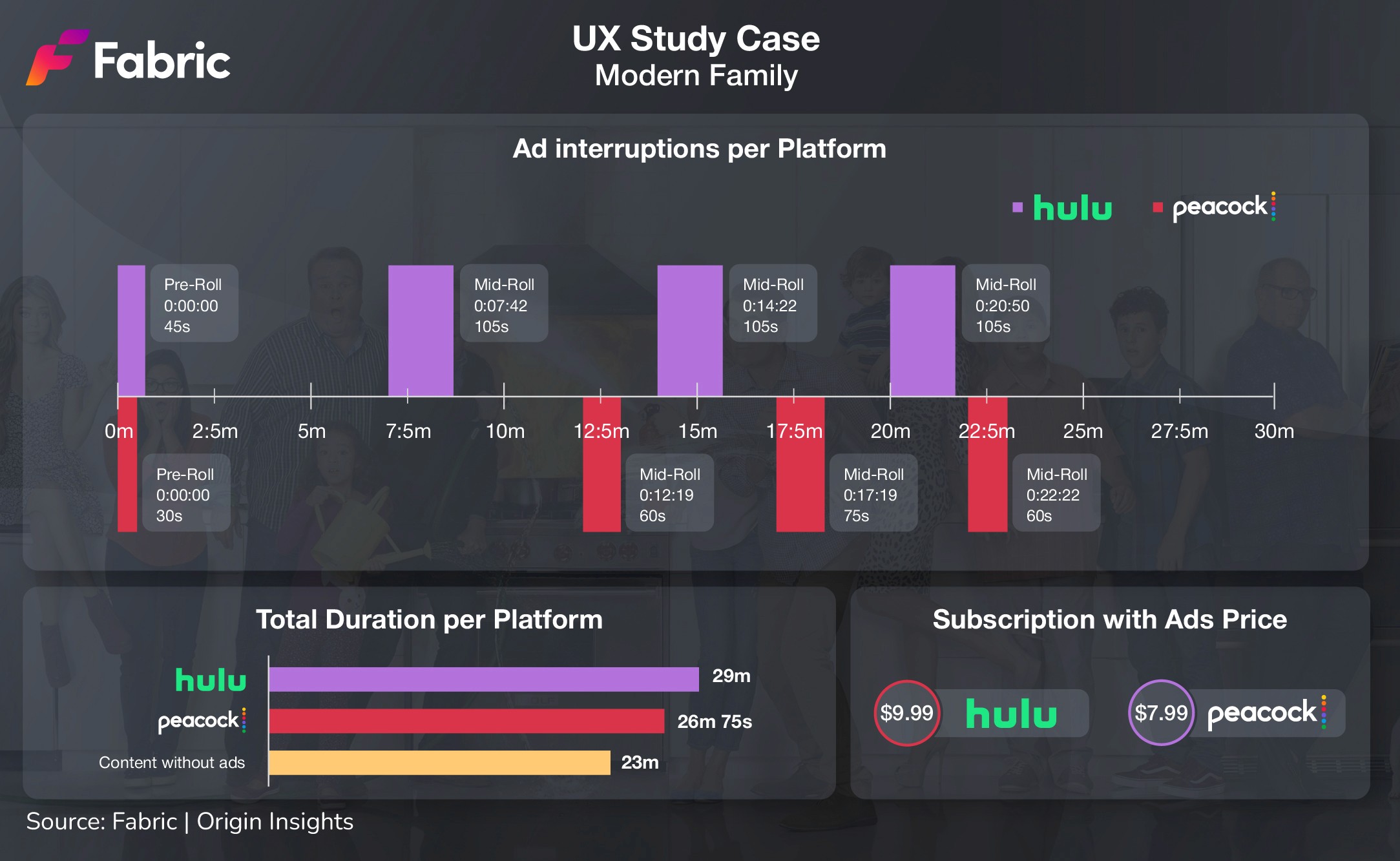
Even for the same title, ad breaks differ across platforms, showing that content interruptions are not just a technical necessity but a distinct experience and strategic choice for each service. Similarly, Peacock and Hulu’s approaches to Modern Family highlight how ad intensity affects perception. Hulu delivers 15.7 minutes of ads per hour–over a quarter of the content–creating a highly monetized but potentially disruptive experience, while Peacock, with 9.8 minutes, shows it’s possible to generate revenue with less viewer frustration. Both platforms use roughly the same number of ad breaks, but they’re not synchronized, and Hulu consistently adds an extra ad per break, so while Peacock runs three mid-rolls, Hulu runs four, making interruptions feel more frequent.
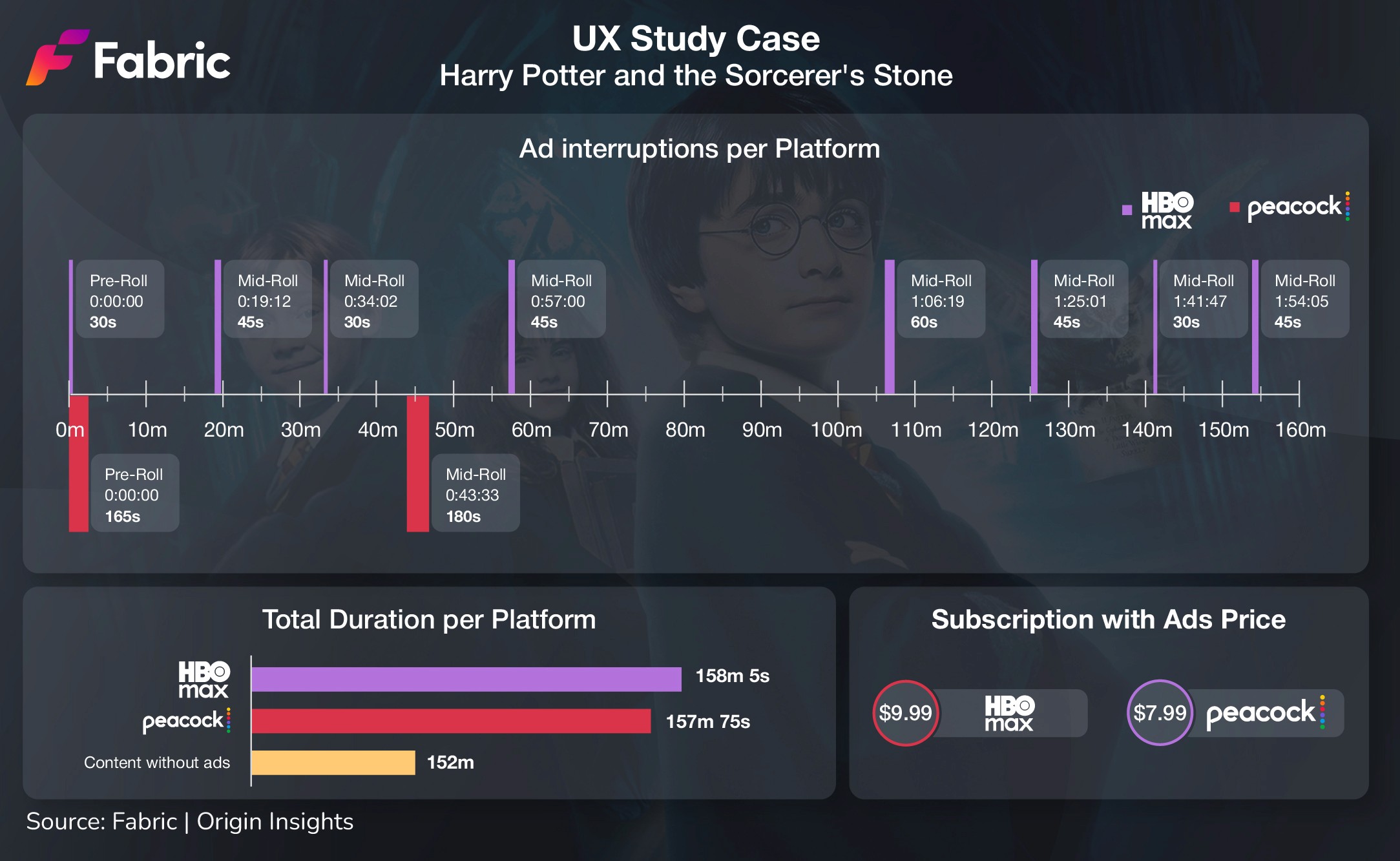
Even subtle differences matter. In Harry Potter and the Sorcerer’s Stone, Peacock concentrates ads in a few long breaks, whereas HBO Max spreads shorter interruptions evenly. This affects how viewers perceive control and pacing during playback. Netflix, focusing on exclusive content, keeps ad exposure minimal (3–4 minutes per hour), showing that monetization can coexist with a premium, user-centric experience when carefully managed.
These examples show that ad strategy goes beyond minutes per hour– it’s about content type, platform positioning, and overall viewer experience. Some platforms focus on monetization, others on continuity and brand perception, highlighting the challenge of balancing revenue with audience satisfaction.
Trends and Opportunities
Ad-supported streaming in the USA offers clear monetization opportunities, but strategies vary by platform and content type. For platforms yet to embrace this model, there is room to tap into ad revenue by designing strategies that match content profiles and audience expectations, balancing monetization, intrusiveness, and perceived value to build a sustainable advertising business without eroding brand perception or viewer loyalty –stay tuned to learn about which brands are setting the pace in streaming advertising and how they fight for visibility.
Similar Articles
We're constantly pushing the boundaries of what's possible and seeking new ways to improve our services. Search your topic of interest.