Mar 5, 2026
It has been a year since Fabric's acquisition of BB Media. Honestly, the progress we've made — and where we're headed — has exceeded what we thought was realistic when the deal closed.
What We Were, and Where That Fell Short
BB Media was built around a single ambition: to be the most complete database of streaming services, channels, and titles in the world. We wanted our clients to be able to open a dashboard and find whatever they were looking for. For a while, that was enough.
But the industry didn't stay still. Our metadata had real gaps — Sports, Podcasts, and FAST Channels were missing entirely. Producers, distributors, and content buyers were struggling to validate their own data with no reliable process to do it. And the clients who did have access to dashboards rarely had the time to actually use them. A better index wasn't going to solve any of that. Something more fundamental needed to change.
Building the Infrastructure, Not Just the Map
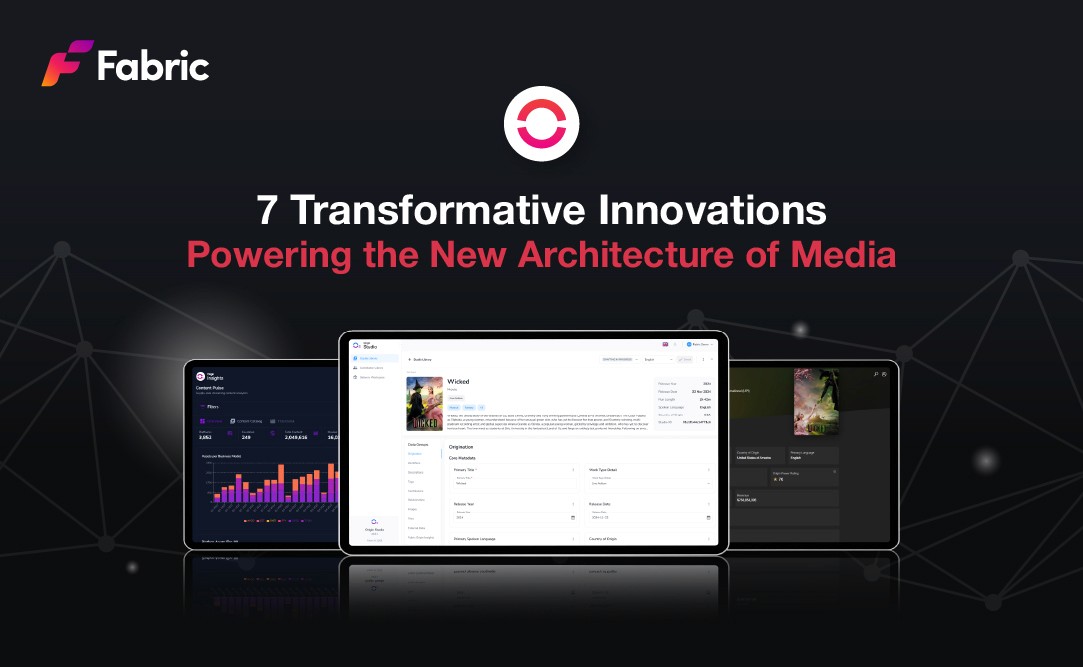
The first problem to solve was governance. Good data has to start somewhere clean, and that's what Origin Studio addresses. It gives enterprise teams full visibility into every stage of a content record — from Draft through Legal, Ratings, Marketing, and Published — with approvals tracked throughout. The goal isn't to slow things down with checkpoints. It's to make sure nothing falls through the cracks while teams are still moving fast.
With a reliable foundation in place, the next challenge was distribution. Origin Nexus is built API-first and moves metadata globally in real time — titles, episodes, trailers, promotional assets, hundreds of datapoints per title. It also connects directly to third-party partners including IMDb, Rotten Tomatoes, Fandango, Common Sense Media, SportsDataIO, Metacritic, and Simply TV through unified IDs. What used to be a fragmented collection of separate sources now works as a single, consistent dataset.
Turning Data Into Something Useful
Having good data flowing cleanly is only worth something if people can actually act on it. Origin Insights takes supply and demand signals at a global scale and surfaces them in formats teams can use — updated visual interfaces, direct S3 deliveries, and open APIs. Later in Q2, we're adding AI and Natural Language Querying so clients can pull insights conversationally, using the AI models they're already working with through Model Context Protocols. Your internal data and our industry data will work together, not in parallel.
One System, Not Three Products
What we've built with the Origin suite isn't three separate tools that happen to share a name. Origin Studio, Origin Nexus, and Origin Insights are designed to work as one connected system. Content production, metadata, discoverability, availability, and demand analytics feed into each other. They also connect with the third-party vendors and AI tools our clients already depend on.
Our focus for 2026 is straightforward: less friction, more clarity, and faster answers. We want our clients' creative and operational teams spending their time on the work that matters, not wrestling with data infrastructure.
A year ago we were helping people navigate this industry from the outside. Today we're part of the infrastructure that keeps it running. That's what it means to be Fabric.
Read More Articles
We're constantly pushing the boundaries of what's possible and seeking new ways to improve our services.