Mar 5, 2026
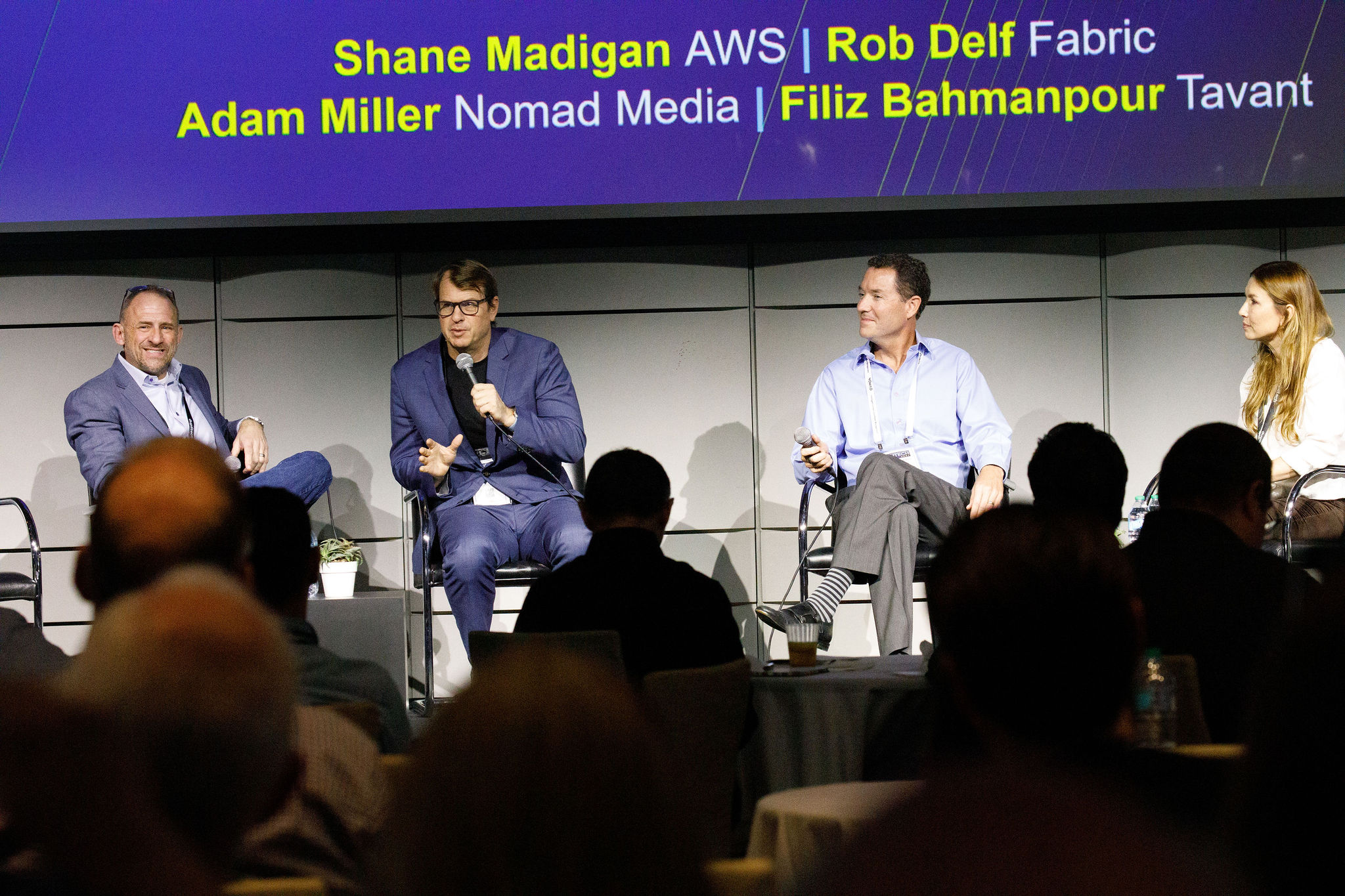
This past Wednesday I had the privilege of speaking at DEG’s EnTech Fest in Los Angeles on a panel titled “Adding AI Layers to Modernize Legacy Product Offerings.” Sitting alongside Shane Madigan from Amazon Web Services and Adam Miller from Nomad Media—moderated by Filiz Bahmanpour of Tavant—we shared the story of how Fabric partnered with the AWS Prototyping Team to bring genuinely transformative AI capabilities into Xytech, our flagship platform for media and entertainment operations management.
I walked off that stage energized. Not just because the audience was engaged and the questions were sharp, but because the story we told is one I’m incredibly proud of—and the results we’re seeing are, frankly, mind-blowing.
The Challenge That Started It All
Our customers in media and entertainment operate in one of the most complex scheduling environments imaginable. They’re juggling Media Orders, production schedules, resource allocations across facilities, talent, and equipment—often with razor-thin margins for error and punishing deadlines. For years, the process of building those initial schedules and resource plans was painstaking, manual work. The kind of work that consumed hours upon hours of skilled operators’ time and still left room for costly mistakes.
We knew AI could help. More importantly, our customers knew it could help—they were asking us for it. That customer pull was a powerful signal. We didn’t set out to build AI for the sake of a buzzword. We set out to solve a real, painful, everyday problem that our users face.
Enter the AWS Prototyping Team
When we connected with the AWS Prototyping Team, things accelerated in a way I didn’t think was possible. This is a program that most people in the industry don’t even know exists—but it should be on every technology leader’s radar. AWS embeds a dedicated team of AI engineers and architects alongside your own engineers to rapidly prototype solutions, working backwards from your customers’ actual workflows.
In about two and a half months, we went from concept to a working prototype of a multi-step AI agent that assists our customers with complex scheduling for Media Orders and production. This isn’t a chatbot. This isn’t a simple recommendation engine. This is an intelligent agent that understands the nuances of resource allocation, facility availability, and production constraints—and can build an initial schedule in a fraction of the time it used to take a human operator.
The Results Are Staggering
I don’t use that word lightly. From our initial estimates, we’re seeing a 90% reduction in time when creating initial resource allocations and schedules. Let that sink in for a moment. What used to consume hours of a skilled scheduler’s day can now be accomplished in minutes. That doesn’t just save time—it fundamentally changes what’s possible. It means our customers can explore more scheduling options, respond faster to changes, reduce errors, and free up their most experienced people to focus on the high-judgment decisions that actually require a human touch.
And this is just the beginning. We’re currently hardening the prototype for production, with a planned ship date in April. The AI capabilities we’re building aren’t a bolt-on gimmick—they’re woven into the fabric of how Xytech works, designed to make our customers’ daily operations meaningfully better.
We Are Living in an Extraordinary Moment for AI
One of the themes that came through on the panel—and that I’ve been reflecting on since—is just how far AI has come, and how quickly it’s accelerating. A year ago, what we’ve built would have been a research project. Two years ago, it would have been science fiction. The capabilities available today through services like AWS Bedrock and the broader generative AI ecosystem are rising beyond what even the most optimistic among us thought possible.
We’re not just adding AI features to check a box. We’re witnessing a fundamental shift in what software can do for people. The gap between “cool demo” and “production-grade tool that changes how you work” is closing fast—and for companies willing to invest in the engineering rigor to cross that gap, the rewards are enormous.
Bridging Legacy and the Future
The title of our panel was deliberately chosen: Adding AI Layers to Modernize Legacy Product Offerings. There’s a misconception in the market that AI is only for greenfield startups building from scratch. That’s simply not true. In many ways, companies with deep domain expertise and established customer relationships are better positioned to deliver meaningful AI solutions—because they understand the problem space intimately.
Xytech has decades of domain knowledge in media operations baked into its architecture. The AWS engagement didn’t just help us bolt AI onto an old product—it helped us unlock the latent value in our platform in ways that solved larger challenges we’d been wrestling with for years. That’s the real magic: AI as an accelerant for domain expertise, not a replacement for it.
What’s Next
We’re shipping the AI-powered scheduling agent into production in April, and I couldn’t be more excited for our customers to get their hands on it. If you’re attending NAB 2026 in Las Vegas this April, come find us—we’d love to show you what we’ve built and talk about where we’re headed next.
A huge thank you to the DEG team—especially Bekah Sturm—for putting together an outstanding event, to Filiz Bahmanpour for her sharp moderation, and to Shane Madigan and the entire AWS Prototyping Team for being such incredible partners on this journey. And thank you to my Fabric team, particularly Meghan Ross for championing this opportunity, and Scott Blomquist and the engineering team for their tireless work turning prototype into product.
The future of enterprise software is intelligent, and it’s arriving faster than anyone predicted. We’re thrilled to be building it.
Rob Delf, CEO
Want to learn more? Visit us at NAB 2026 in Las Vegas this April to see the AI-powered Xytech scheduling agent in action.
Read More Articles
We're constantly pushing the boundaries of what's possible and seeking new ways to improve our services.