Learn More

API-first has become one of the most widely used terms in media technology, applied to platforms with genuinely different architectures and very different real-world behaviors. Before it can be a useful criterion for evaluating a metadata management platform, it needs a precise definition.
The actual architectural difference
A metadata management platform is API-first when its records are exposed via structured APIs as the primary means of access, not as a secondary feature added to a system built around direct database queries or user interface interactions.
In a platform that has APIs as a feature rather than a design principle, they typically support bulk data export: a downstream system requests all records that have changed since a given timestamp, receives them in a batch, and updates its own local copy. The downstream copy is always behind the authoritative record by the length of the sync interval, and any system that modifies its local copy independently creates a divergence that must be reconciled.
In a genuinely API-first records metadata management platform, consumer systems need not maintain local copies. They can query the authoritative record directly when they need it and receive current data rather than a snapshot from the last sync cycle. Alignment is a structural property of the architecture rather than the product of periodic reconciliation.
What it genuinely solves
The practical benefit is specific: API-first eliminates the class of inconsistency problems that arise from downstream systems maintaining their own copies of records that change at the source.
In a bulk-export model, a synopsis updated in the master catalog may take hours or days to reach the CMS, the partner portal, and the distribution pipeline, depending on sync schedules. If a delivery runs during that window, the wrong version goes out. That is not a process failure; it is a structural consequence of the architecture.
An API-first foundation removes that window entirely. For backward-compatible changes to the data model, downstream systems that consume the API receive updates automatically. For changes that introduce new data points, downstream consumers still need to update their code to process the new fields, but they are doing so against a single documented interface rather than against a separate bespoke connector for each integration.
What it does not solve
This is the part vendor marketing typically omits. Being API-first is necessary but not sufficient. A poorly normalized data model delivered via API propagates inconsistency in real time rather than in batches, which is faster but no better. A platform without metadata governance workflows cannot enforce the data quality standards that make the metadata source of truth trustworthy in the first place.
The decisions that determine whether a metadata scalability architecture holds up at enterprise scale operate above the API layer: how records are structured and governed, how automated metadata enrichment is handled at the point of creation, and how the metadata integration model is organized so that adding new distribution partners does not compound maintenance burden indefinitely. API-first is the foundation those decisions require. It is not a substitute for making them.
How Origin Studio is built for this
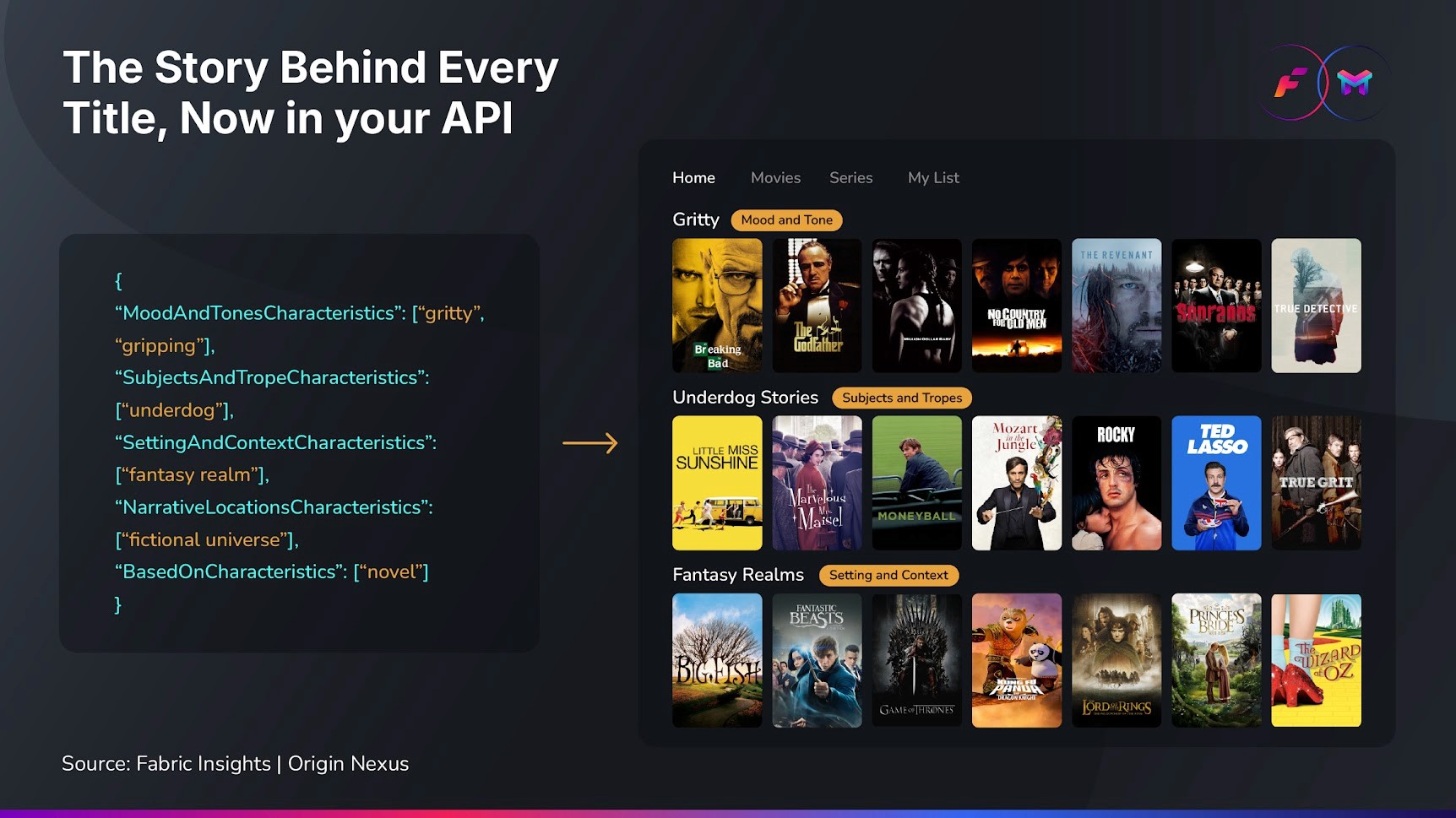
Origin Studio is API-first in the precise sense described above: its records are designed for real-time consumption rather than scheduled bulk export, so downstream systems always work from the same metadata source of truth without maintaining local copies that drift over time.
That delivery layer is the foundation. The media records management governance architecture built on top of it, covering configurable metadata models, role-based access controls, and stage-based approval workflows, is what makes the authoritative record worth depending on. Content metadata enrichment can be at the point of record creation through Origin Nexus, so records enter the system carrying normalized metadata rather than waiting for manual population.
For organizations evaluating studio metadata solutions, the right question is not whether a platform is API-first. Most modern platforms can make that claim. The right question is what the architecture looks like above the API layer.
Stay ahead of the curve
We publish regular insights on metadata architecture, records management, and the infrastructure decisions that determine how well media organizations scale. Follow Fabric on LinkedIn for new articles as soon as they drop.
Fabric is a global media data company. The Origin product family, including Origin Nexus, Origin Studio, and Origin Insights, powers metadata enrichment, governance, and market intelligence for entertainment companies worldwide.
FAQ
Similar Articles
We're constantly pushing the boundaries of what's possible and seeking new ways to improve our services. Search your topic of interest.