Learn More
/
Why Transactional Streaming Remains a Key Player in the Evolving Entertainment Market
Transactional streaming services have endured despite fierce competition from subscription and ad-supported models. BB Media’s latest analysis dives into why the pay-per-view model still plays a significant role in today’s digital entertainment landscape.
Pay-Per-View Streaming Market in the U.S.
In the U.S., the transactional streaming model holds its ground. BB Media data reveals that 49% of households still engage in digital rentals or purchases. The primary demographic are ages 25 to 34, of which 69% are users of transactional platforms. Of the 737 streaming services in the U.S., 82 of them offer transactional options, though only 13 rely solely on it. This reflects the enduring appeal of transactional streaming, even as hybrid models dominate the market.
Leading Platforms in Transactional Streaming
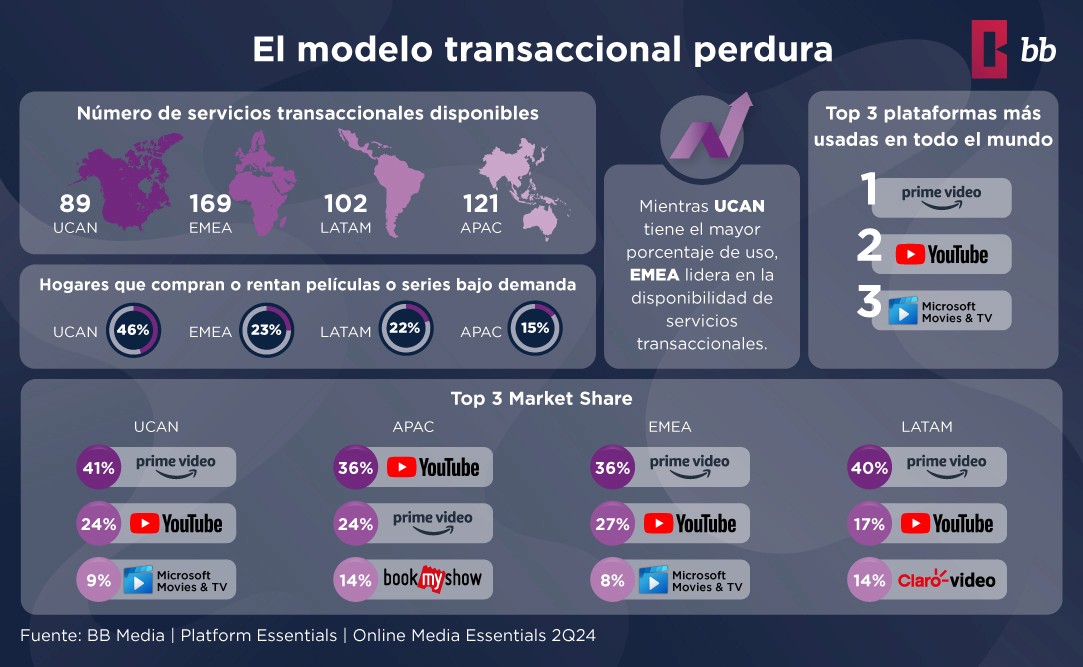
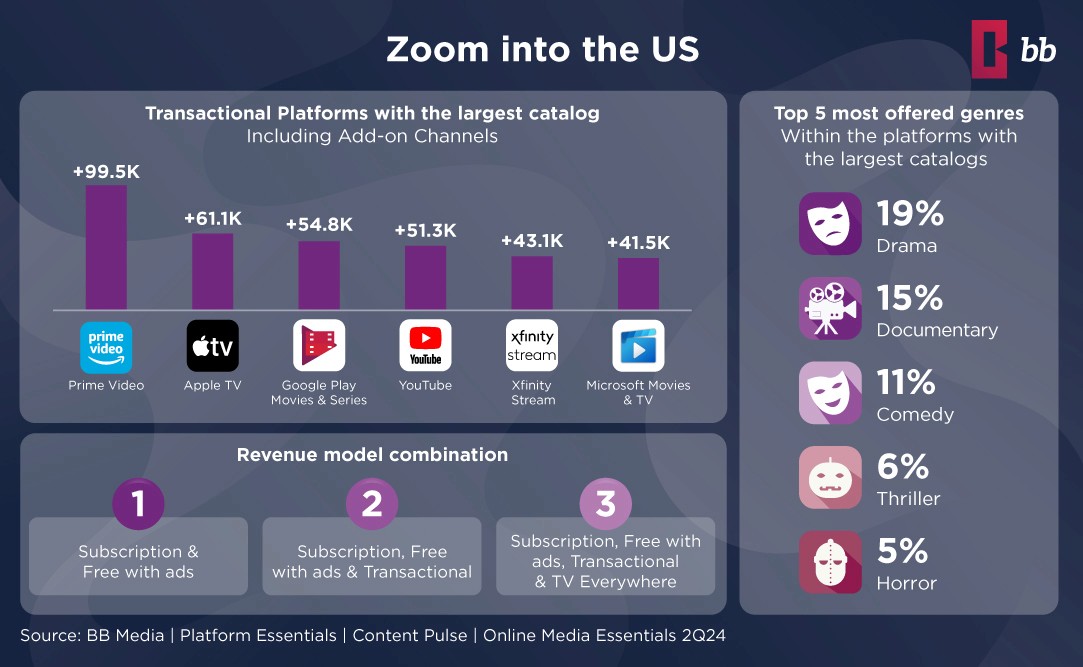
Prime Video stands as the most popular platform for purchasing or renting content, holding a 41% share. In the U.S., it offers over 99,000 transactional titles, including those accessible through add-on Channels. This extensive library outpaces competitors like Apple TV, Google Play Movies & TV, YouTube, Xfinity Stream, and Microsoft Movies & TV. These platforms combine transactional services with subscription or ad-supported content, offering maximum flexibility for viewers. These platforms blend transactional services with subscriptions or ad-supported content, maximizing flexibility for consumers.
Top Genres in Transactional Content:
Drama (19%)
Documentaries (15%)
Comedy (11%)
This diverse content selection enhances the appeal of transactional streaming to various audiences.
Exclusive Windows and its edge Against Piracy
Transactional streaming platforms play a critical role in the movie distribution ecosystem, particularly during the 2-3 months exclusivity window following a film’s theatrical release.
During this period, movies are typically not yet available on subscription streaming services, making rental or purchase the only legal avenues for audiences to access new releases. This exclusivity provides transactional platforms with a key advantage; however, the delay can also drive viewers toward online piracy. By offering a legal and immediate alternative, transactional services help fill this gap, catering to audiences eager to watch titles unavailable elsewhere.
Beyond new releases, transactional streaming also addresses the challenges of fragmented content availability. Licensing and distribution agreements often prevent subscription platforms from hosting all titles, leaving audiences with limited options unless they subscribe to multiple services.
Transactional platforms, such as Prime Video in the U.S., streamline this process by consolidating content into a single marketplace where users can rent or buy a vast selection of films. This not only reduces subscription fatigue but also enhances user convenience while encouraging legal content viewership.
Adaptability Ensures Longevity
The transactional streaming market has adapted to evolving consumer demands. Platforms like Prime Video and Apple TV continue to integrate multiple business models, ensuring that users have various options. For those who prioritize immediate access and flexibility without long-term commitments, transactional streaming remains an attractive choice.
In the face of growing competition from subscription and ad-supported services, the transactional streaming market proves its resilience. It offers users exclusive content, flexibility, and a critical window for access, ensuring it remains a key player in the digital entertainment landscape.
BB Media’s insights show that the interest in transactional streaming not only persists but adapts, cementing its relevance in an ever-changing industry.
Discover all the transactional services available for free! Just go to the BB Media’s Streaming Services Directory and choose “Transactional” in the Business Model filter.
Powered by BB Media, a Fabric Data company
Similar Articles
We're constantly pushing the boundaries of what's possible and seeking new ways to improve our services. Search your topic of interest.