Learn More
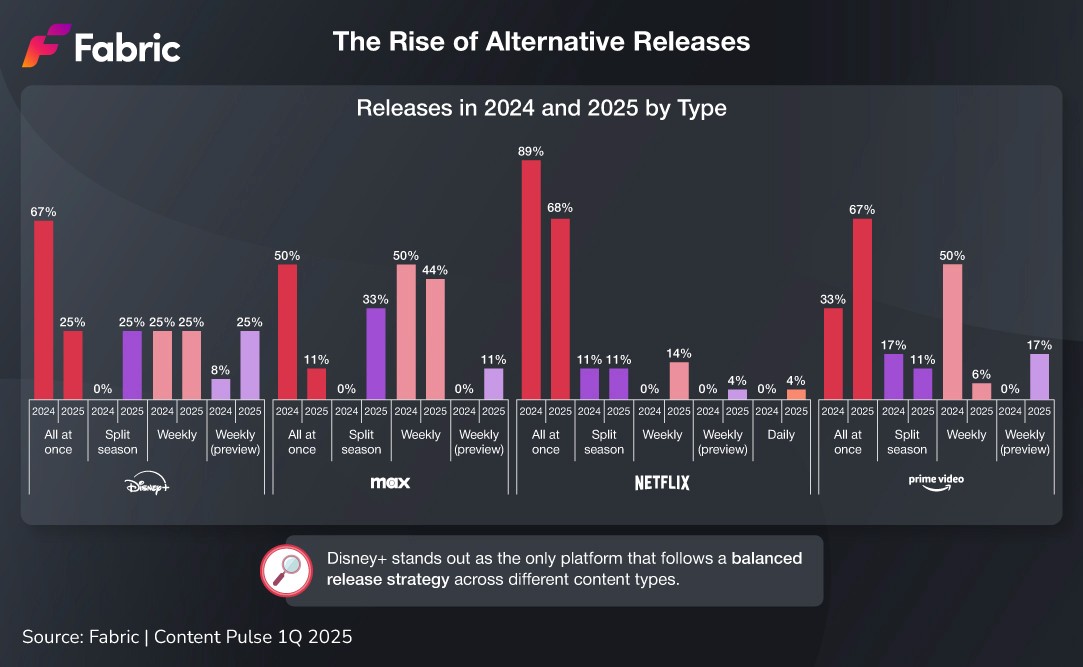
The full-season drop model, popularized by Netflix, reshaped television viewership patterns by enabling on-demand, uninterrupted viewing. However, in the last year, multiple US-based platforms began adopting alternative release strategies to increase sustained engagement and subscriber retention.
The Rise of Alternative Release Strategies
Platforms like Netflix remain largely committed to the binge model, releasing 68% of their original series in full. Prime Video, on the other hand, showed a more balanced use of release strategies in 2024. However, in 2025, the platform shifted significantly toward the all-at-once model, increasing its use from 33% to 67%. Both platforms are also experimenting with alternative approaches: launching two or three episodes initially and then continuing with weekly drops, or dividing seasons into batches. For instance, Prime Video premiered the third season of Reacher (2022) releasing the first three episodes together, followed by weekly installments. Another example is Netflix’s Beauty in Black (2024), which was released in two parts: the first half of the season premiered in October 2024, and the second half followed in March 2025, with eight episodes in each batch.
In 2025, both Disney+ and Max began adopting a strategy already seen on Netflix and Prime Video: splitting season launches into two separate drops. This reflects a growing trend among major platforms to diversify their release methods. Disney+ uses different release models depending on the show. In the first quarter of 2025, it applied the four main strategies in equal proportion: all at once, weekly drops, split-season releases, and weekly releases with a two- or three-episode preview. Meanwhile, Max has made the biggest shift—dropping only 11% of shows all at once compared to 50% in the past. Most Max originals now follow weekly or split-season structures. One example is The Pitt, a Max original that premiered in January 2025 and adopted a weekly release schedule throughout its season.
Why Are Platforms Changing Course?
While bingeing is operationally convenient, it has a downside: subscribers who finish a series can cancel their plans. Weekly or multi-part releases promote longer engagement, and help shows stay in public conversation—especially on social media, based on patterns identifying viewing behavior and platform strategies.
This behavior is confirmed by the fact that viewership typically spikes over weekends, especially shows with Friday or Thursday releases. Meanwhile, weekday viewing is more limited, often just one or two episodes at a time. But do these strategies work?
Highlighted Cases: What Works Best
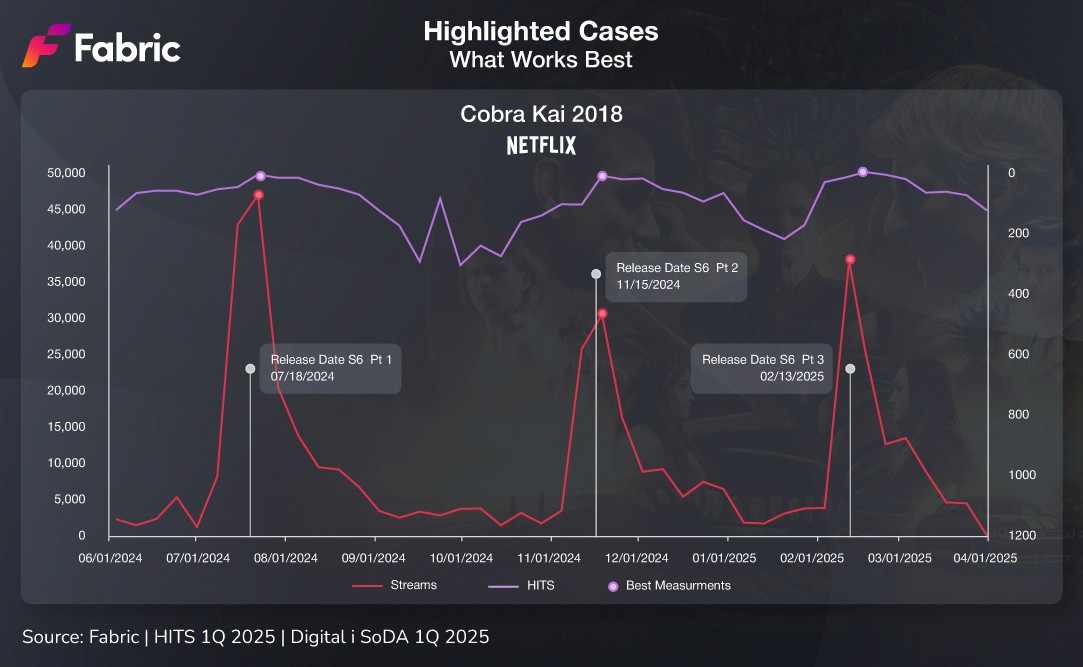
Cobra Kai (2018 - 2025 | Netflix): Final season released in three batches (July, November, February). Each batch sparked a surge in demand—especially before and during episode- drops.
Andor (2022 - Current | Disney+): Second season was released in four weekly batches of three episodes. Demand rose steadily and peaked mid-season, maintaining momentum throughout.

Invincible (2021- Current | Prime Video): Split-season approach for the second season saw viewership peak during key episodes. Between November 2023 and March 2024, there was a slight declining trend in engagement, suggesting that grouped drops work better than isolated weekly episodes. Season three began in February 2025 with a preview of the first three episodes, but didn’t gain significant traction until more episodes became available.

The Last of Us (2023 - Current | Max): Both seasons followed a weekly release model. In season 2, viewership climbed gradually post-premiere, but engagement improved only after multiple episodes were available — suggesting that audiences often wait before diving in.

What the Data Tells Us
Grouped releases—such as 2-4 episodes at launch—are proving to be the sweet spot. They combine the best of both worlds: satisfying the binge viewer without sacrificing long-term engagement. Weekly-only drops tend to lag until a critical mass of episodes is available.
Original vs. Licensed Content: Different Rules Apply
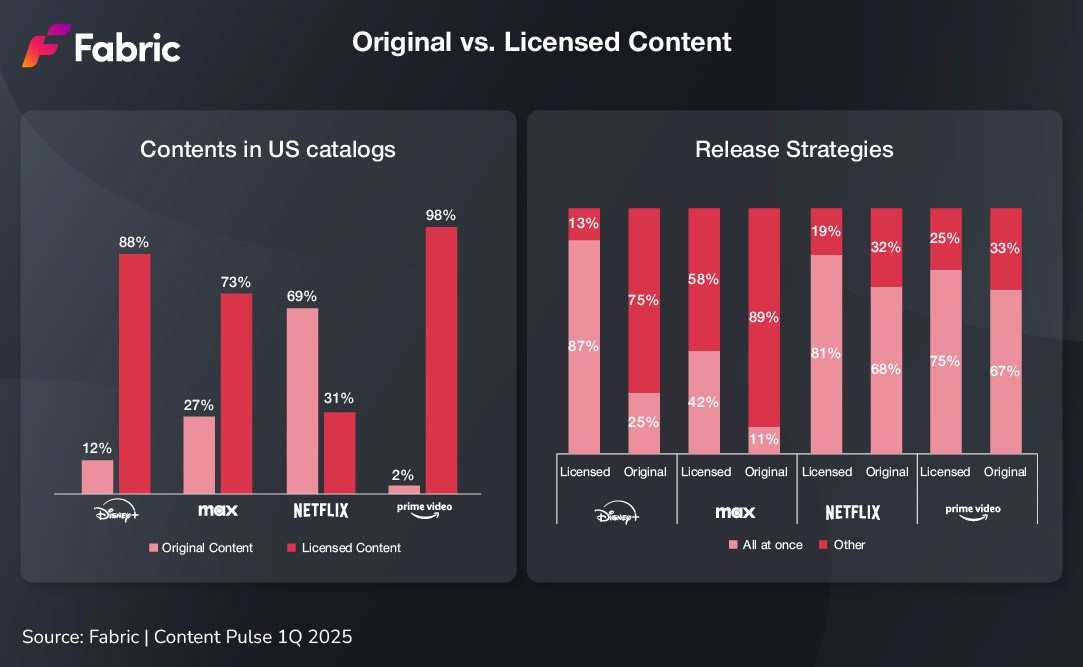
Hybrid strategies are almost exclusively used for original content. For licensed series, 80% are still released all at once—largely because they've aired elsewhere, and staggered releases don't offer the same retention value.
Platforms like Max are exceptions, occasionally applying hybrid models to licensed content from partner brands like Cartoon Network.
The Return of TV Logic in the Streaming Era
Streaming platforms are moving away from binge-only drops and returning to a more strategic, TV-inspired model. By releasing content gradually—whether weekly, in small batches, or through split seasons—they’re tapping into old strategies to solve new challenges: keeping audiences engaged longer, boosting social buzz, and reducing churn.
Understanding audience behavior through these insights is key to making informed release decisions. Using audience data strategically allows platforms to align release timing with how audiences actually watch and engage, increasing the chances of long-term engagement and sustained cultural relevance. In many ways, what’s old is new again. The future of streaming may look a lot like the past of broadcast TV—just smarter, more flexible, and powered by data.
Looking Ahead: What's Coming in 2025
Upcoming series are leaning into hybrid formats:
Wednesday (Netflix S2): Two-part release with four episodes each (Aug 6 & Sep 3)
Ironheart (Disney+): Two-episode premiere on June 24, followed by weekly drops
Countdown (Prime Video): Three-episode drop on June 25, with weekly follow-ups
Meanwhile, Netflix will add Scandal (an ABC original) in full on June 17th, reaffirming the all-at-once strategy for non-originals.
Similar Articles
We're constantly pushing the boundaries of what's possible and seeking new ways to improve our services. Search your topic of interest.