Learn More
/
The Presence of African Content on Streaming
Streaming platforms worldwide feature a diverse selection of African content, fueled by the local production, international collaborations and global recognition of African filmmakers. Currently, over 5,300 African productions are available on streaming services, with 85% being movies and 15% series. Between 2024 and 2025, over 200 titles have been released and soon added to global streaming services, highlighting both the continent’s cultural richness and platforms’ efforts to diversify their catalogs. Content buyers have an opportunity to further expand their catalogs with African productions, bringing more diverse stories to global audiences. Nowadays, the global travelability of the productions where African countries have participated on is ranked by United States, Canada, United Kingdom, France and Australia.
Leading African Content Countries
Historically, African productions on streaming services largely originate from three dominant markets. Nigeria accounts for 23% of these titles, positioning it as a powerhouse in African filmmaking. South Africa follows with 17%, and Egypt, with 15%, remains a historical hub for cinema and television. These nations have thriving entertainment industries that not only create content for their domestic markets but also engage in international collaborations.
Streaming platforms have increasingly turned to these countries as key partners for original productions. Over the past five years, Netflix has released more than 60 originals produced in Nigeria, South Africa, and Egypt. While the majority are movies (60%), series are not far behind (40%). Some standout titles include Love Never Lies: South Africa (2024), Heart of the Hunter (2024), and Losing Lerato 2 (2024).
More recently, Prime Video has also expanded its investment in African productions. Between 2023 and 2025, the platform released titles such as Ebuka Turns Up Africa (2024), Gangs of Lagos (2023), LOL: Last One Laughing Naija (2023), SHE Must Be Obeyed (2023), and Dans tes rêves (2023).
There is a growing global interest in leveraging these regions for original content, offering streaming platforms a unique opportunity to create diverse productions with fresh cultural perspectives.
Genre Trends in African Productions
From 2023 and on, Drama has been the most dominant genre in productions where African countries participated, reflecting its universal appeal across different cultures. Comedy remains strong, particularly in Egypt. While thrillers productions are also gaining traction—especially in South Africa, Egypt, and Nigeria. Something to highlight is that in the last decade, Documentaries have been a steady choice among producers, with over 550 titles.
The Role of International Co-Productions
International co-productions play a crucial role in expanding the reach of African content. Currently, 58% of African titles available on streaming services are co-productions, with South Africa leading in partnerships. The United States is the top collaborator, followed by France, the United Kingdom, and Germany.
These partnerships help African filmmakers access funding, distribution channels, and technical expertise that elevate production quality. Despite strong ties with international partners, intra-African co-productions remain relatively low. This presents an opportunity for regional collaboration, allowing filmmakers within Africa to tell stories that resonate more deeply with local audiences while also appealing to global markets.
Top Streaming Platforms Showcasing African Content
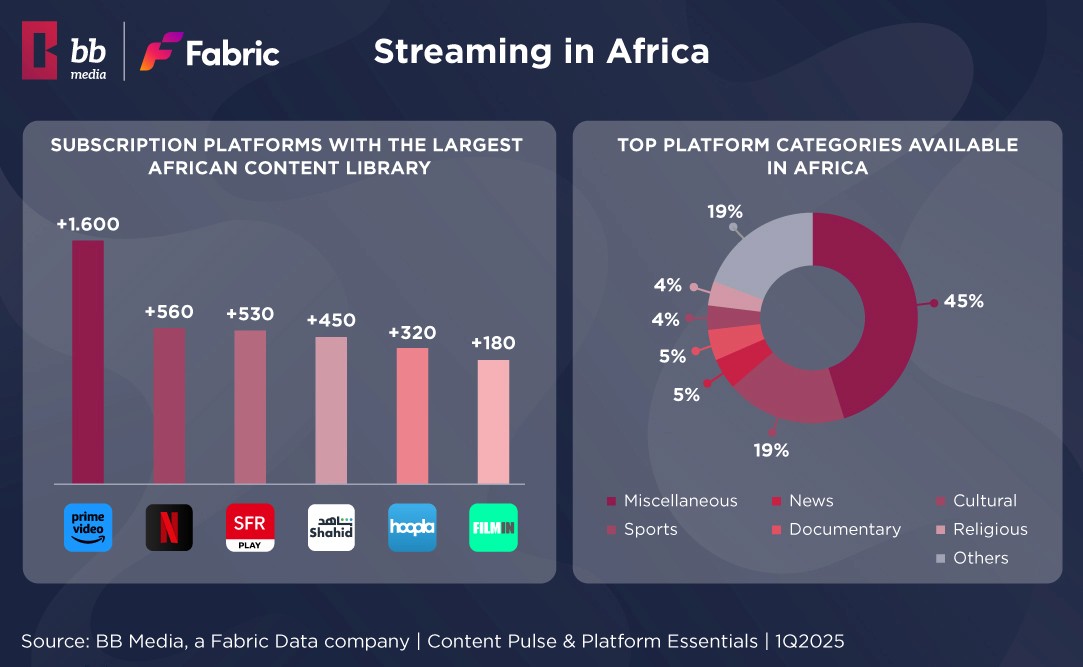
The availability of African content worldwide varies across subscription platforms, with global services playing a dominant role. Prime Video leads with over 1,600 African titles, followed by Netflix (560+), SFR Play (530+), Shahid (450+), Hoopla (320+), and Filmin (180+). While platforms like Netflix and Prime Video provide international exposure, regional services like Shahid play a crucial role in catering to specific markets. On the other hand, Free with ads platforms like Tubi (1000+), Roku Channel (360+) and Plex (310+) further expand access by offering free content, helping African productions reach a wider audience without subscription barriers.
As the demand for diverse storytelling continues to grow, African content is carving out a stronger presence in the global streaming landscape, unlocking new opportunities for African filmmakers. For industry professionals, staying informed about these trends is crucial. Whether you’re a content creator, distributor, or streaming platform, the evolving African streaming market presents exciting possibilities. By embracing African storytelling and leveraging emerging distribution channels, the future of African content on streaming is poised for continued expansion and global success.
Want to learn more about the local platforms? Dive into BB Media’s Streaming Services Directory, select “Africa” on the region filter and get free data of the local players!
Powered by BB Media, a Fabric Data company

Similar Articles
We're constantly pushing the boundaries of what's possible and seeking new ways to improve our services. Search your topic of interest.